
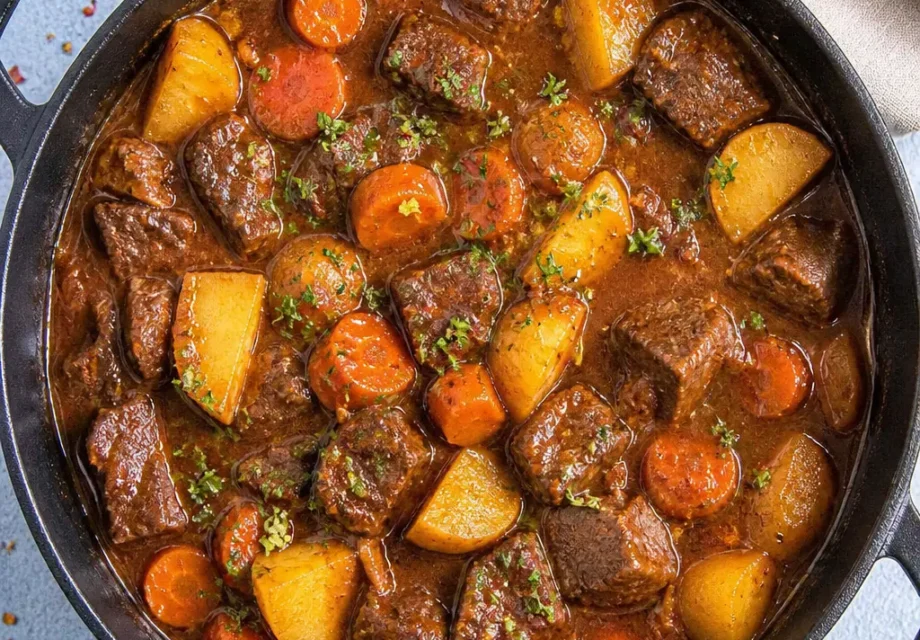
Why You’ll Love This Recipe
I truly believe food has always been more than just food to me, and this easy classic beef stew recipe is a perfect example of that. It’s the kind of dish that warms your soul, and I promise, you’ll feel like a kitchen wizard after making it.
- You’ll achieve unbelievably tender, fall-apart beef every single time, thanks to the careful searing and the right simmering temperature. No dry, chewy bits here!
- The rich, glossy broth develops a profound depth of flavor from the tomato paste and red wine, concentrating as it slowly cooks down. It coats the back of a spoon beautifully.
- The vegetables, added at just the right time, are perfectly tender without being mushy, adding sweetness and texture to every bite.
- It’s a meal that actually gets better after a day or two in the fridge, making it fantastic for meal prepping or enjoying leftovers that taste even more amazing.
- While it has a generous cook time, most of it is hands-off simmering, freeing you up to do other things around the house or just relax. This is the kind of recipe that makes the day better.
Ingredients + Substitutions
Classic Beef Stew Recipe you really want to pay attention to your ingredients. Good quality makes all the difference here, bringing so much warmth to the table.
For the Beef & Seasoning
3 pounds beef chuck (cut into 1.5-inch chunks, well-marbled):
This is your hero ingredient. Chuck roast has just the right amount of fat and connective tissue to break down into incredibly moist, tender meat during a long, slow cook. Don’t go for a leaner cut; it just won’t be the same! *
1/4 cup all-purpose flour (for coating):
This isn’t just to thicken the stew. Coating the beef helps create a fantastic crust during searing, which locks in flavor and adds texture. It also helps bind the spices to the meat. *
1 tablespoon paprika (smoked or sweet):
I lean towards smoked paprika for a deeper, more robust flavor that complements the beef beautifully. If you prefer a milder taste or just have sweet paprika on hand, that works too! *
1 teaspoon salt (adjust to taste):
Essential for seasoning the beef directly. You’ll adjust again at the end, but this initial seasoning is crucial for flavor integration. *
1 teaspoon black pepper (freshly ground):
Freshly ground is always best. The aroma and bite of fresh pepper are far superior to pre-ground.
Aromatics & Foundation
4 tablespoons olive oil (divided):
We’ll use this for searing the beef in batches and then for sautéing our veggies. A good olive oil adds a nice, subtle fruitiness. *
1 large white onion (chopped):
The cornerstone of so many stews. It sweetens and deepens as it cooks, building a foundational flavor. *
1 green bell pepper (chopped, or substitute jalapeño for heat):
Adds a lovely freshness and a hint of sweetness. For a little kick, a finely diced jalapeño (seeds removed if you’re sensitive to heat) can be a fun addition! *
1 stalk celery (chopped):
Part of the classic mirepoix (the French base of onion, celery, and carrot). It adds an earthy, savory note. *
5 garlic cloves (minced):
Don’t be shy with the garlic! It adds such a wonderful, pungent aroma and flavor. Mince it finely so it disperses evenly.
3 tablespoons tomato paste (for depth):
This concentrated paste is a flavor powerhouse. It adds umami and a rich, slightly sweet tang without making the stew taste overtly tomato-y. Don’t skip browning it a bit in the pot!
Liquids & Seasonings
2 cups red wine (Cabernet Sauvignon or substitute beef stock):
A dry red wine, like a Cabernet Sauvignon or Merlot, deglazes the pan beautifully and adds incredible complexity and tang. If you prefer to avoid alcohol, simply use an equal amount of good quality beef stock instead. *
2 cups beef stock (low sodium preferred):
Our main liquid. Using low sodium gives you control over the overall saltiness of the dish. I prefer a richer beef stock if I can find it, rather than just broth. *
1 tablespoon Worcestershire sauce:
A secret weapon in my kitchen! It gives a boost of savory, tangy depth that you just can’t quite pinpoint but absolutely notice. *
1 tablespoon Italian seasoning (dried herb blend):
A convenient blend of dried herbs like oregano, basil, rosemary, and thyme. If you don’t have it, a teaspoon of dried thyme and half a teaspoon of dried rosemary would be lovely. *
2 bay leaves:
These quiet heroes infuse a subtle, woody aroma throughout the stew. Remember to fish them out before serving; they’re not friendly to chew on!
Hearty Vegetables
1 pound yellow potatoes (peeled and cut into bite-sized pieces):
Yukon Golds are my go-to choice because they hold their shape well, don’t get mealy, and have a lovely creamy texture. Cut them into roughly 1-inch pieces so they cook evenly. *
3 large carrots (peeled and cut into chunks):
Carrots add natural sweetness and a beautiful color. I like to cut them into chunky, rustic pieces, about 1-inch thick.
How to Make Our Classic Beef Stew Step by Step
Making this Classic Beef Stew Recipe is a patient process, but the hands-on time is pretty minimal, and the reward is absolutely worth it. Nothing fancy, just really good food.
Prepare the Beef and Season
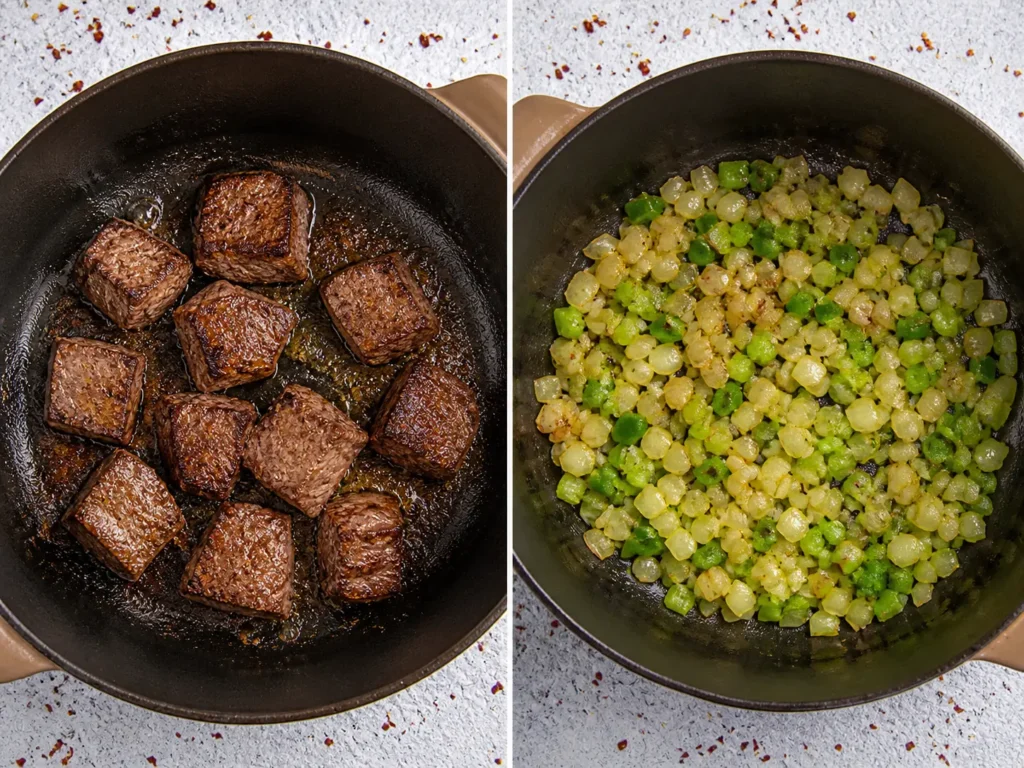
Firstly, the beef! Get your 3 pounds of beef chuck, cut into nice 1.5-inch chunks. You want them pretty uniform so they cook evenly. In a medium bowl, combine your ¼ cup all-purpose flour, 1 tablespoon paprika, 1 teaspoon salt, and 1 teaspoon freshly ground black pepper. Now, toss the beef chunks in this mixture until they’re lightly coated. They shouldn’t be caked in flour, just a thin, even dusting. This step is crucial for both browning and thickening. When I do this, I make sure each piece looks dry and a little chalky, ready to take on that beautiful sear.
Sear the Beef for Deep Flavor
Next, grab your trusty Dutch oven or another heavy-bottomed pot. Heat 1 tablespoon of olive oil over medium-high heat until it’s shimmering but not smoking. This is important—you want a hot pan for a good sear. Working in batches (don’t crowd the pot, or your beef will steam instead of brown!), add some of the flour-coated beef. Let it sear for about 5 minutes per batch, turning to get a deep brown crust on all sides. You’ll hear that satisfying sizzle, and the beef will start smelling rich and caramelized. Once beautifully browned, transfer the seared beef to a plate and set it aside. This browning step alone creates so much depth that you just can’t skip.
Sauté the Aromatic Vegetables
With the beef set aside, add another tablespoon of olive oil to the same pot over medium heat. Now, toss in your chopped white onion, green bell pepper, and celery. Stir them around, letting them soften and become translucent. This usually takes about 5-7 minutes. You’ll notice the fond—those browned bits from the beef—starting to loosen from the bottom of the pot, which is exactly what we want.
Build Flavor with Garlic and Tomato Paste
Clear a little space in the center of the pot, add your remaining tablespoon of olive oil if needed, and toss in the minced garlic and tomato paste. Cook them for about 1 minute, stirring constantly, until the garlic is fragrant and the tomato paste has deepened in color. It’ll smell almost sweet and very concentrated. This step toasts the tomato paste and mellows the raw garlic, bringing out their best flavors.
Deglaze the Pan
Now for the magic! Pour in your 2 cups of red wine (or beef stock if you’re going alcohol-free). Use a wooden spoon to vigorously scrape up all those browned bits from the bottom of the pot. This is called deglazing, and those bits, the “fond,” are pure flavor gold. The liquid will turn a rich, dark color and smell wonderfully complex. Let it simmer gently for 2-3 minutes to allow some of the alcohol to cook off.
Combine and Season
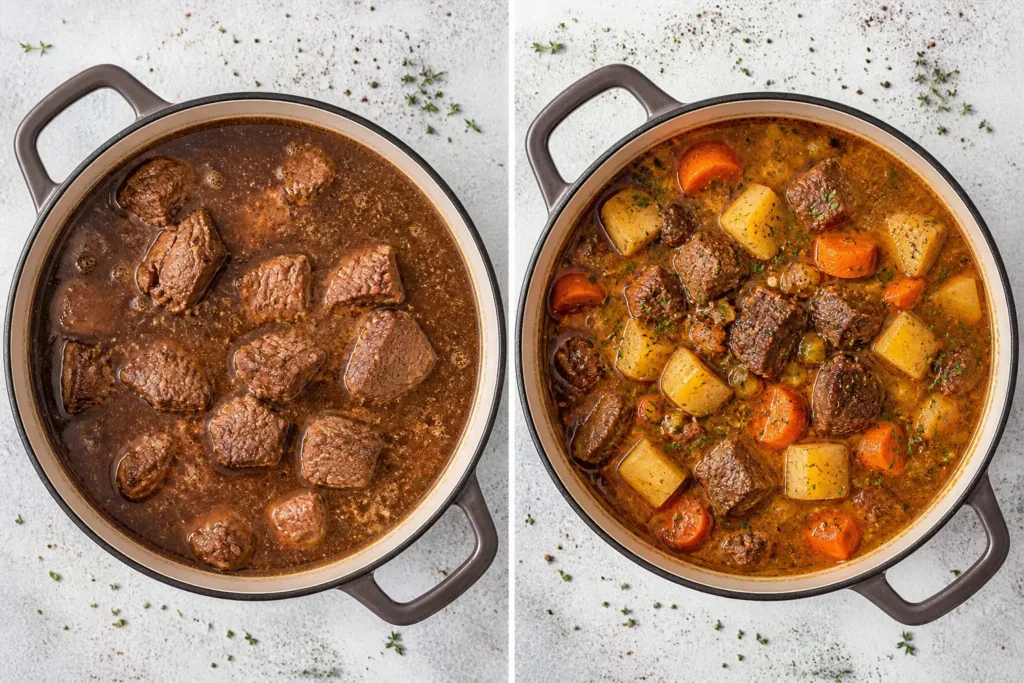
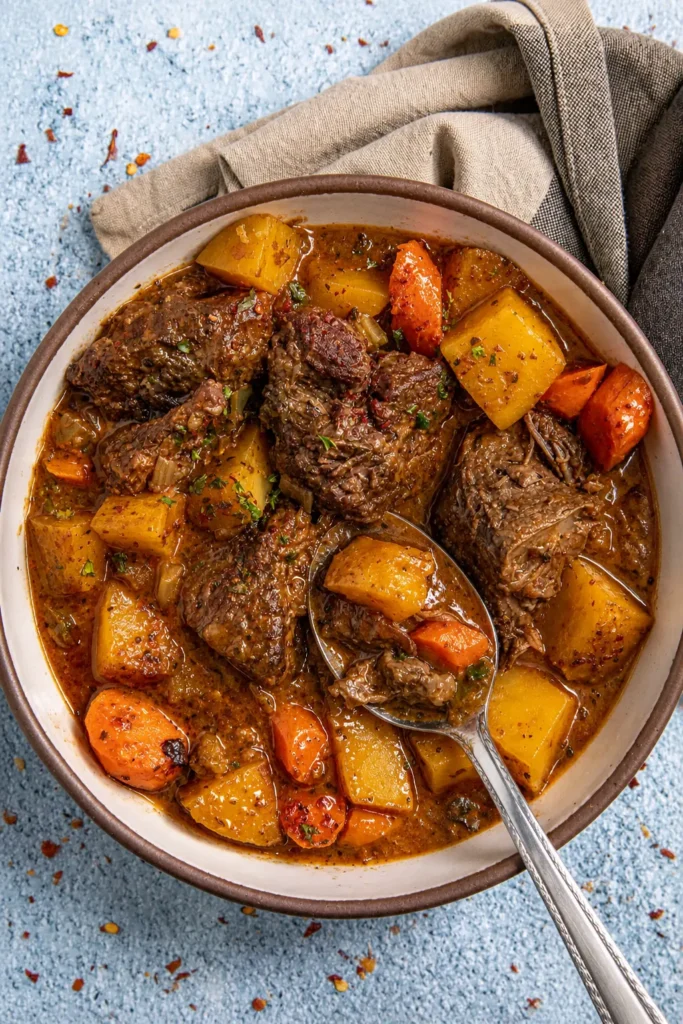
Return all that beautifully seared beef and any juices that have accumulated on the plate back into the pot. Add your 2 cups of beef stock, 1 tablespoon of Worcestershire sauce, 1 tablespoon of Italian seasoning, and your 2 bay leaves. Give everything a good stir to combine. Make sure the beef is mostly submerged in the liquid.
Slow Simmer for Tenderness
Bring the stew to a gentle boil, then reduce the heat to low, cover the pot with a tight-fitting lid, and let it simmer. This is where patience pays off. Simmer gently for 2 whole hours. During this time, the beef will slowly start to break down and become wonderfully tender. You’re not looking for a rolling boil, just a quiet, steady bubble. I often sneak a peek and give it a stir every 45 minutes or so, just to ensure nothing’s sticking.
Add the Root Vegetables
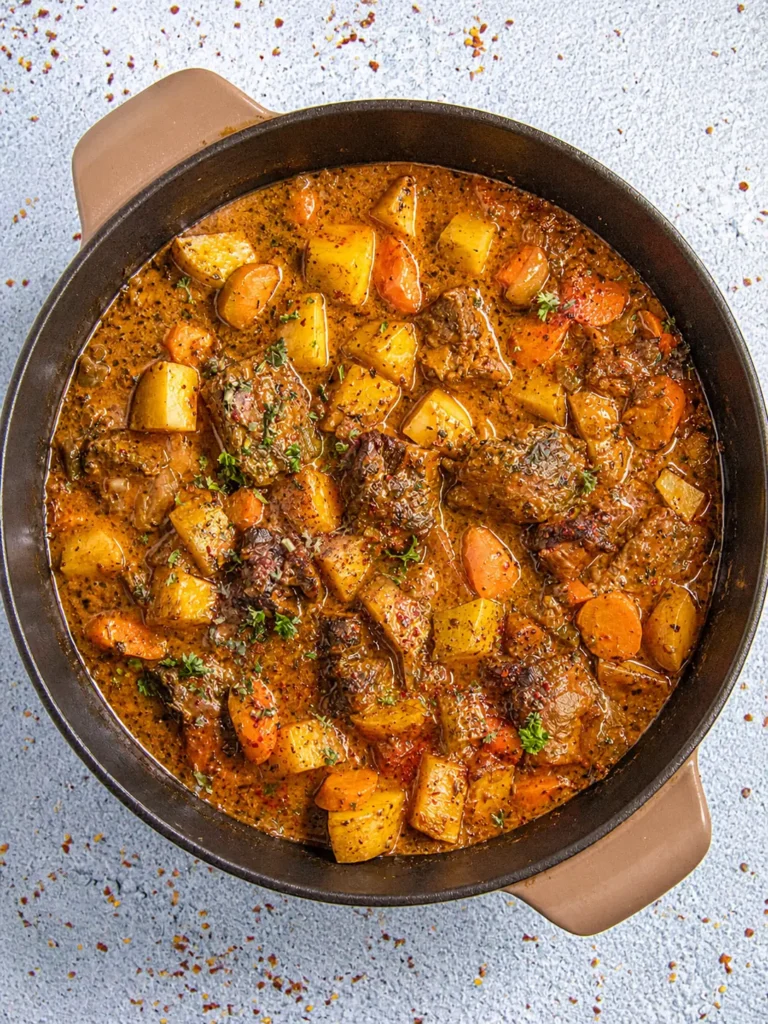
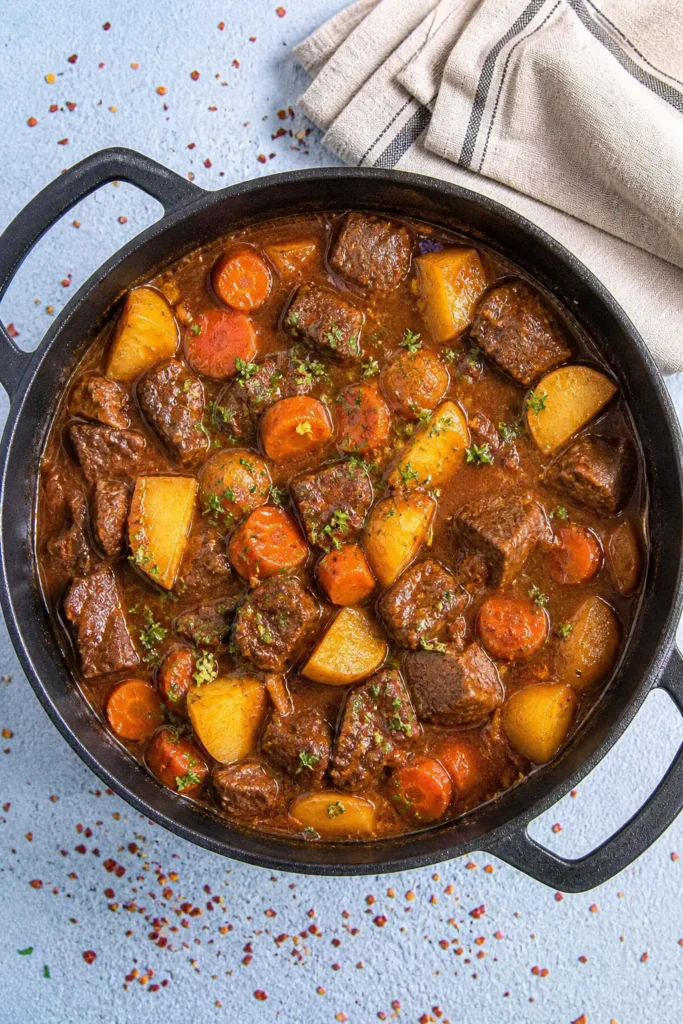
After the beef has had its two-hour head start, it’s time to add the potatoes and carrots. Stir them into the pot, ensuring they’re nestled into the liquid. Continue to simmer, this time uncovered, for another 1 to 1.5 hours, or until the vegetables are fork-tender and the beef is so tender it practically melts in your mouth. The broth will also have thickened nicely by this point, coating all the ingredients. When it’s ready, the vegetables will be soft, and the beef will easily shred with a fork. This is one of those recipes you’ll want to make again.
Rest and Serve the Classic Beef Stew
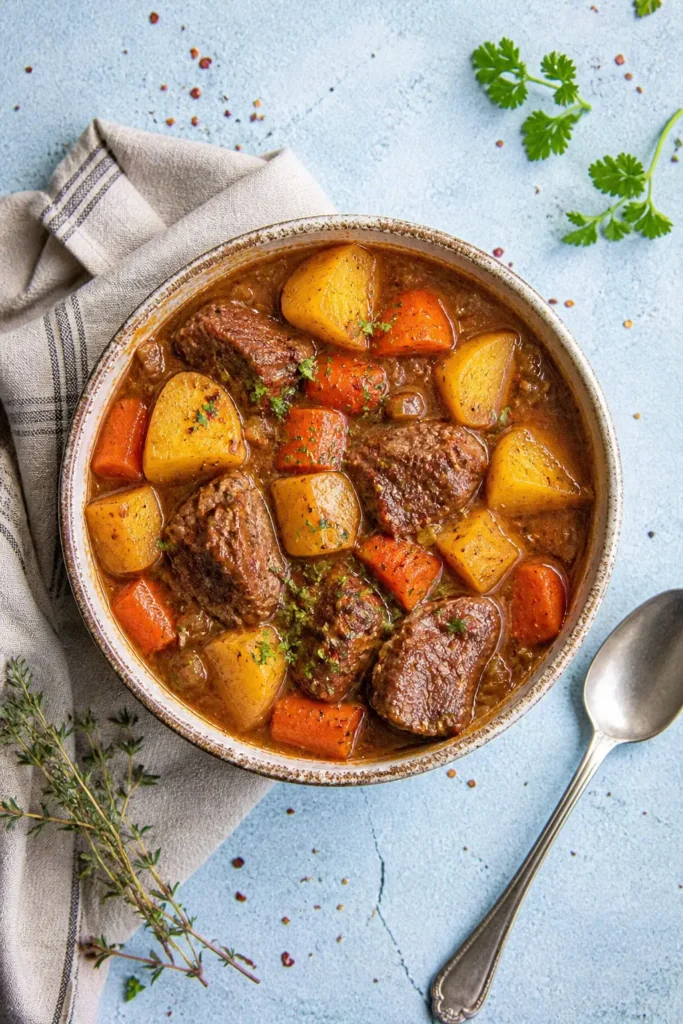
Once everything is cooked to perfection, remove the pot from the heat. Carefully fish out and discard the bay leaves – no one wants to accidentally bite into one! Let the stew rest, uncovered, for about 10-15 minutes before serving. This resting period allows the flavors to truly meld and the broth to settle and thicken even more. The aroma right now will be absolutely intoxicating. Serve this hearty
Classic Beef Stew Recipe in big bowls, perhaps with some crusty bread for dipping, and watch it disappear. I’m always chasing that homemade kind of comfort, and this dish delivers every single time.
Expert Tips
Making a really good beef stew isn’t hard, but a few little tricks I’ve picked up over the years can make all the difference.
Sear the beef thoroughly:
Don’t rush this step. Browning the meat in batches until it has a deep, dark crust creates a layer of intense flavor that forms the backbone of your stew. *
Don’t over-thicken with flour at the start:
The small amount of flour for coating the beef is usually enough to give the stew a nice body. If you want it thicker, use a cornstarch slurry at the end, as it gives you more control and prevents a pasty texture. *
Use good quality beef stock:
This is a key flavor component. A richer, dark beef stock will contribute significantly more depth than thin, watery broth.
Add vegetables later for texture:
While it’s tempting to throw everything in at once, adding root vegetables like potatoes and carrots in the last hour or so of cooking prevents them from turning to mush. They should be tender, but still hold their shape. *
Taste and adjust seasoning at the very end:
As the stew simmers, the liquids reduce and flavors concentrate, so what seems perfectly seasoned at the beginning might be too salty at the end. Always do a final taste test before serving.
Variations
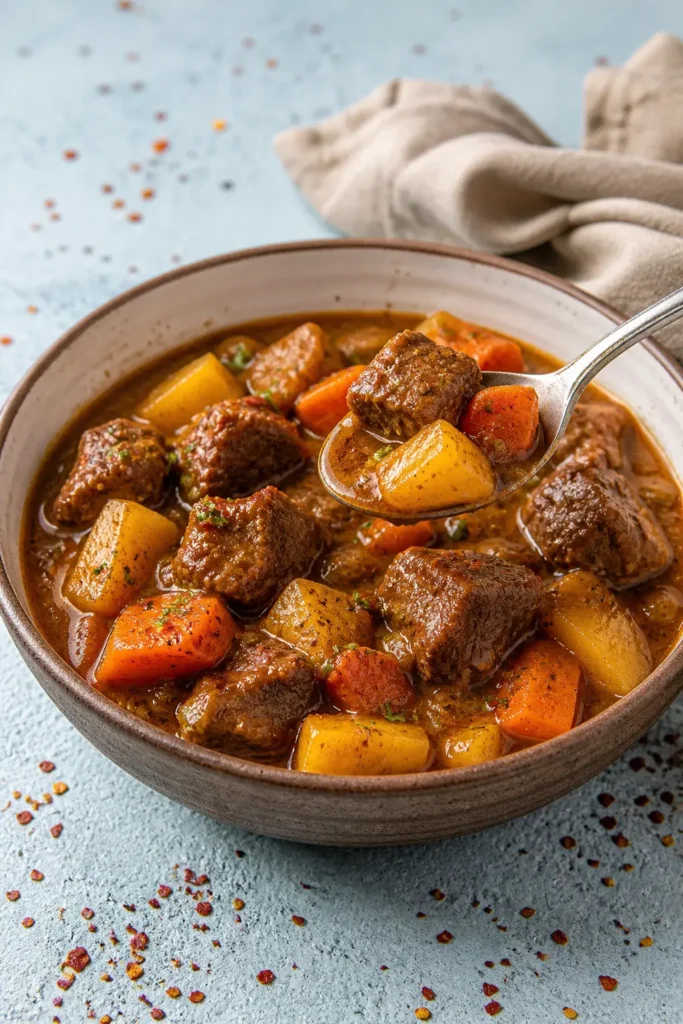
I love recipes that feel comforting and doable, and this one is so adaptable. Here are some ways to change up your Classic Beef Stew Recipe
Alcohol-Free Version
If you prefer to skip the wine, it’s an easy swap. Just use an additional 2 cups of beef stock in place of the red wine. The stew will still be incredibly flavorful, perhaps slightly less complex in its acidity, but still deeply savory and satisfying.
Add More Greens
For a boost of nutrients and color, you can easily stir in a handful or two of fresh spinach or kale during the last 10-15 minutes of cooking. The heat from the stew will wilt them perfectly. You could also add frozen peas or cut green beans during the last 15 minutes.
Herbaceous Twist
While Italian seasoning is great, you can play with other herbs. Try a sprig or two of fresh rosemary and a few sprigs of fresh thyme, tied together with kitchen twine (a “bouquet garni”). Add it with the bay leaves in Step 7 and remove before serving. Fresh herbs bring a bright, vibrant aroma.
Spicy Kick
For those who like a bit of heat, consider adding a pinch of red pepper flakes along with the paprika, or a diced jalapeño or serrano pepper when you sauté the onions. You could even swirl in a tablespoon of harissa paste for a North African-inspired flavor.
Storage + Reheating
This is one of those dishes that tastes even better the next day, making it perfect for planning ahead or enjoying leftovers. This one brings so much warmth to the table.
Storing in the Refrigerator
Once you Classic Beef Stew Recipe has cooled completely (important for food safety!), transfer it to an airtight container. It will keep beautifully in the refrigerator for up to 4 days. The flavors actually deepen and meld overnight, which is a lovely bonus.
Freezing for Longer Storage
Beef stew freezes incredibly well. Allow it to cool entirely, then portion it into freezer-safe containers or heavy-duty freezer bags. Try to remove as much air as possible if using bags. It can be frozen for up to 3 months. When you’re ready to enjoy it, thaw it overnight in the refrigerator before reheating.
Reheating Instructions
For reheating, your best bet is stovetop. Transfer the stew to a pot and warm it over medium-low heat, stirring occasionally, until it’s heated all the way through. This usually takes about 15-20 minutes. If the stew seems too thick after being in the fridge or freezer, just add a splash of beef stock or even water to reach your desired consistency. You can also reheat individual portions in the microwave, stirring halfway through for even heating. Just be careful not to overheat it, which can make the beef a bit tough.
Frequently Asked Questions About Beef Stew
What’s the best cut of beef for stew?
I always recommend beef chuck roast. It has the perfect balance of meat, fat, and connective tissue. During long, slow cooking, this tissue breaks down, rendering the beef incredibly tender and contributing richness to the broth. Other cuts like round or flank can be too lean and dry out.
Can I make this beef stew in a slow cooker?
Absolutely! This easy classic beef stew recipe adapts well to a slow cooker. After you’ve completed Steps 1 through 7 (searing the beef and sautéing the aromatics), transfer everything into your slow cooker. Cook on low for 6-8 hours or on high for 3-4 hours. Add the potatoes and carrots during the last 1 to 2 hours of cooking so they don’t turn to mush.
Why is my stew meat tough?
If your beef stew meat is tough, it almost always means it hasn’t cooked long enough. Beef chuck needs a good amount of time—typically 2.5 to 3 hours of simmering—for its connective tissues to fully break down. Don’t rush it; keep it bubbling gently until the beef is truly fall-apart tender. “Low and slow” is the golden rule for tender stew meat.
There’s something uniquely comforting about a hearty bowl of homemade stew; it’s the kind of dish that truly connects people around the table. This
Classic Beef Stew Recipe is a testament to the magic of slow cooking, transforming humble ingredients into a deeply satisfying meal that feels like a warm embrace. I love the kind of food that brings people together, and this classic certainly does.
Don’t forget to share your Classic Beef Stew creations with us on social media! Leave a comment below with your favorite way to serve it!
Classic Beef Stew Recipe for Cozy Family Dinners
- Prep Time: 25
- Cook Time: 195
- Total Time: 220
- Yield: 6–8 servings 1x
- Category: Dinner
- Method: Stovetop
- Cuisine: American
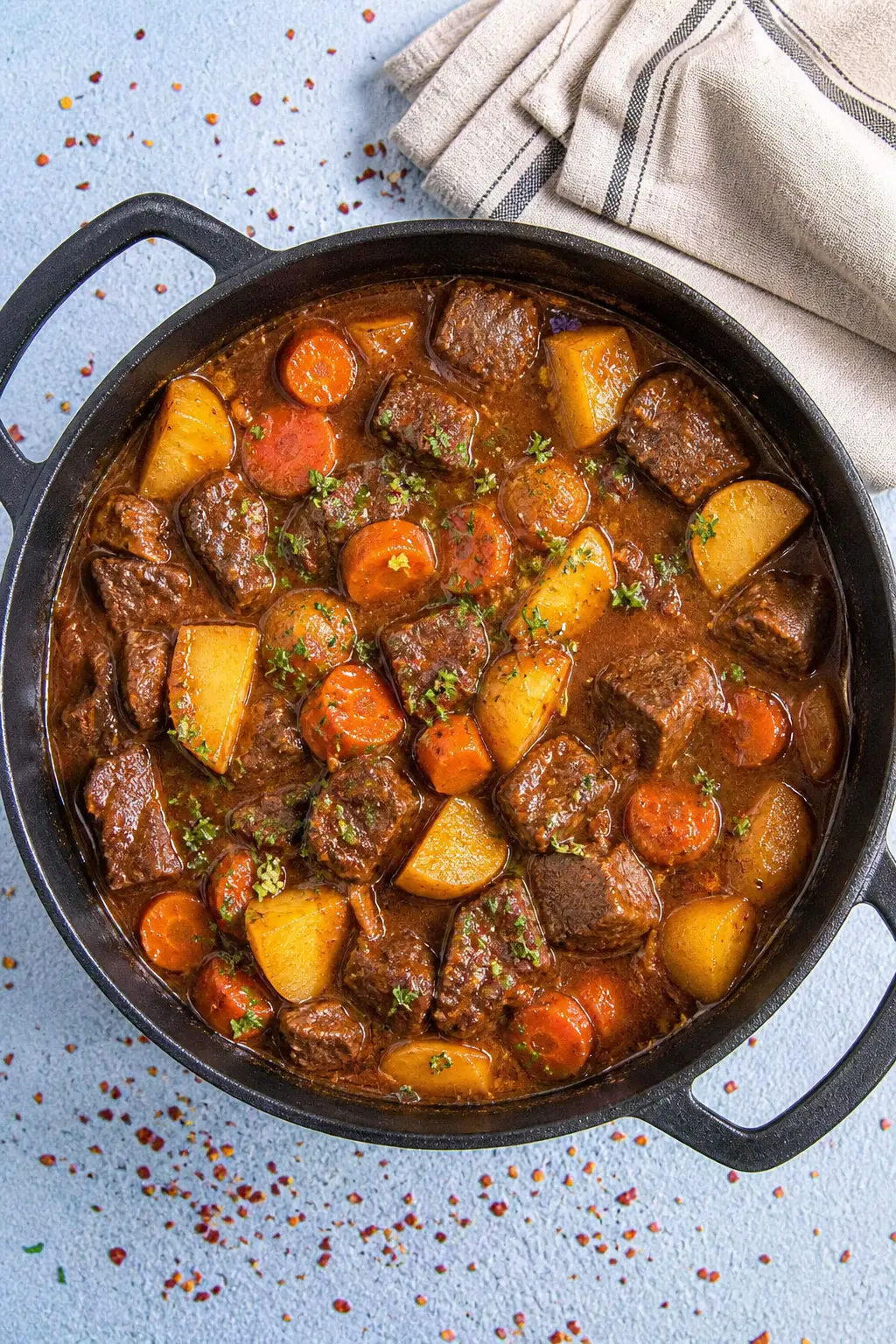
Description
This classic beef stew recipe delivers incredibly tender, fall-apart beef in a rich, glossy broth that’s the epitome of comfort food.
Achieve unparalleled depth of flavor and perfect texture through careful searing and a long, gentle simmer, making every spoonful truly memorable.
Ingredients
- Beef & Seasoning
- 3 pounds beef chuck (cut into 1.5-inch chunks, well-marbled)
- 1/4 cup all-purpose flour (for coating)
- 1 tablespoon paprika (smoked or sweet)
- 1 teaspoon salt (adjust to taste)
- 1 teaspoon black pepper (freshly ground)
- For Sautéing
- 4 tablespoons olive oil (divided)
- 1 large white onion (chopped)
- 1 green bell pepper (chopped)
- 1 stalk celery (chopped)
- 5 garlic cloves (minced)
- 3 tablespoons tomato paste (for depth)
- Liquids & Aromatics
- 2 cups red wine (Cabernet Sauvignon, or substitute beef stock)
- 2 cups beef stock (low sodium preferred)
- 1 tablespoon Worcestershire sauce
- 1 tablespoon Italian seasoning (dried herb blend)
- 2 bay leaves
- Vegetables
- 1 pound yellow potatoes (peeled and cut into bite-sized pieces)
- 3 large carrots (peeled and cut into chunks)
Instructions
- Prep the beef: In a medium bowl, combine flour, paprika, salt, and pepper. Add the beef chunks and toss until they are lightly and evenly coated; the surface should look dry and dusted.
- Heat the Dutch oven: Heat 1 tablespoon of olive oil in a large Dutch oven or heavy-bottomed pot over medium-high heat (about 350°F equivalent) until shimmering but not smoking.
- Sear the beef: Working in 3 batches, brown the beef on all sides, about 5 minutes per batch, until a deep brown crust forms. Transfer the seared beef to a plate and set aside.
- Sauté the aromatics: Add 1 tablespoon of olive oil to the pot, then add chopped onion, bell pepper, and celery. Cook for about 5 minutes over medium heat (about 300°F equivalent) until softened and slightly translucent.
- Bloom the garlic and tomato paste: Stir in the minced garlic and tomato paste; cook for 1 minute until fragrant and the paste darkens slightly, enhancing its flavor.
- Deglaze the pot: Pour in the red wine, beef stock, and Worcestershire sauce. Scrape the bottom of the pot with a wooden spoon to release any browned bits; the liquid should darken and smell rich.
- Combine and season: Return the seared beef and any accumulated juices to the pot. Stir in the Italian seasoning and bay leaves, ensuring everything is well combined.
- Simmer for first stage: Bring the stew to a gentle boil, then reduce the heat to a low simmer (about 250°F equivalent), cover the pot, and cook for 2 hours. The beef should begin to soften but still hold its shape.
- Add root vegetables and finish simmering: Stir in the potatoes and carrots. Continue to simmer, uncovered, for an additional 1 hour, or until the vegetables are tender and the beef is fork-tender and easily pulls apart.
- Rest and serve: Remove the bay leaves from the stew. Let the stew rest off the heat for 10 minutes; the broth will thicken slightly and should coat the back of a spoon. Serve warm.
Notes
- Make-ahead: Prepare the stew up to 2 days in advance; the flavors will deepen and improve with time.
- Storage: Store cooled stew in an airtight container in the refrigerator for up to 4 days, or freeze for up to 3 months.
- Reheating: Reheat gently on the stovetop over medium-low heat for 15-20 minutes, adding a splash of beef stock if the stew has thickened too much.
- Substitution: For an alcohol-free version, substitute additional beef stock for the red wine; the flavor will be slightly lighter.
- Serving suggestion: Serve this hearty stew with crusty bread for dipping or over creamy mashed potatoes to soak up all the rich broth.
- Spice it up: For a touch of heat, use a jalapeño instead of a green bell pepper.
Nutrition
- Array