
Craving a truly satisfying Korean dish that balances savory, sweet, and a wonderful chew? This authentic recipe for Korean Japchae Noodles with Beef and Vegetables delivers exactly that. Perfectly bouncy glass noodles, tender marinated beef, and crisp, colorful vegetables come together in a rich, glossy sauce. It’s a delightful meal, perfect for weeknights or sharing!
In This Article
- Why You’ll Love This Japchae
- Ingredients for Korean Japchae Noodles with Beef and Vegetables
- How to Make Japchae Noodles Step by Step
- Tips for Perfect Japchae & Common Mistakes
- Variations and Substitutions
- How to Store and Reheat Japchae
- Serving Suggestions
- Frequently Asked Questions About Japchae
- Enjoy Your Homemade Japchae!
Why You’ll Love This Japchae
This recipe earns rave reviews for its amazing balance of flavors and textures. Here’s why this Korean Japchae Noodles with Beef and Vegetables will become a favorite:
- Irresistibly Chewy Glass Noodles: Achieve that perfect bouncy, springy texture every time.
- Savory-Sweet Signature Sauce: The balanced dressing is the heart of japchae, tying every ingredient together.
- Full of Color and Goodness: Packed with a rainbow of fresh vegetables and hearty beef.
- Great for Making Ahead: Japchae is fantastic for meal prep or gatherings, as flavors deepen overnight.
- Authentic Korean Taste: Bring comforting, complex Korean flavors right into your kitchen.
Ingredients for Korean Japchae Noodles with Beef and Vegetables
Gathering your ingredients ahead of time makes the cooking process smooth. Here’s what you’ll need for this delicious Korean feast.
For the Noodles:
- 200g Dangmyeon (Korean sweet potato glass noodles): Look for these translucent noodles in the Asian aisle. Do not substitute.
- 1 tbsp Sesame oil: For tossing cooked noodles to prevent sticking and add aroma.
For the Beef Marinade:
- 200g Thinly sliced beef: Ribeye, sirloin, or pre-cut bulgogi beef work best. Partially freezing for 20-30 minutes helps with thin slicing.
- 2 tbsp Soy sauce: Your favorite all-purpose soy sauce.
- 1 tbsp Garlic (minced): Freshly minced garlic for best flavor.
- 1 tbsp Sugar: Balances savory notes and helps tenderize beef.
- 1 tbsp Sesame oil: Enhances nutty flavor and coats beef.
- 1/4 tsp Black pepper: Subtle kick and aromatic depth.
For the Vegetables:
- 1 medium Carrot (julienned): Adds natural sweetness and color.
- 150g Fresh spinach: About one medium bunch, blanched and squeezed dry.
- 1/2 medium Onion (thinly sliced): Sweetens as it cooks.
- 1/2 each Bell peppers (red and yellow, julienned): For bright color and gentle crunch.
- 100g Mushrooms (shiitake or cremini, sliced): Shiitake for umami depth, cremini also good.
- 1 tbsp Garlic (minced): Essential aromatic.
- 2 tbsp Cooking oil (vegetable or canola): For sautéing.
For the Japchae Sauce:
- 4 tbsp Soy sauce: Savory base.
- 2 tbsp Sugar: Crucial for sweet and savory balance.
- 2 tbsp Sesame oil: Distinct nutty Korean flavor and glossy finish.
- 1 tbsp Sesame seeds (toasted): Adds texture and aroma.
- 1/4 tsp Black pepper: Final touch to meld flavors.
How to Make Japchae Noodles Step by Step
Making Japchae involves a few quick steps. The magic happens when everything comes together in the final mix for these delicious Korean Japchae Noodles with Beef and Vegetables.
Marinating the Beef for Japchae:
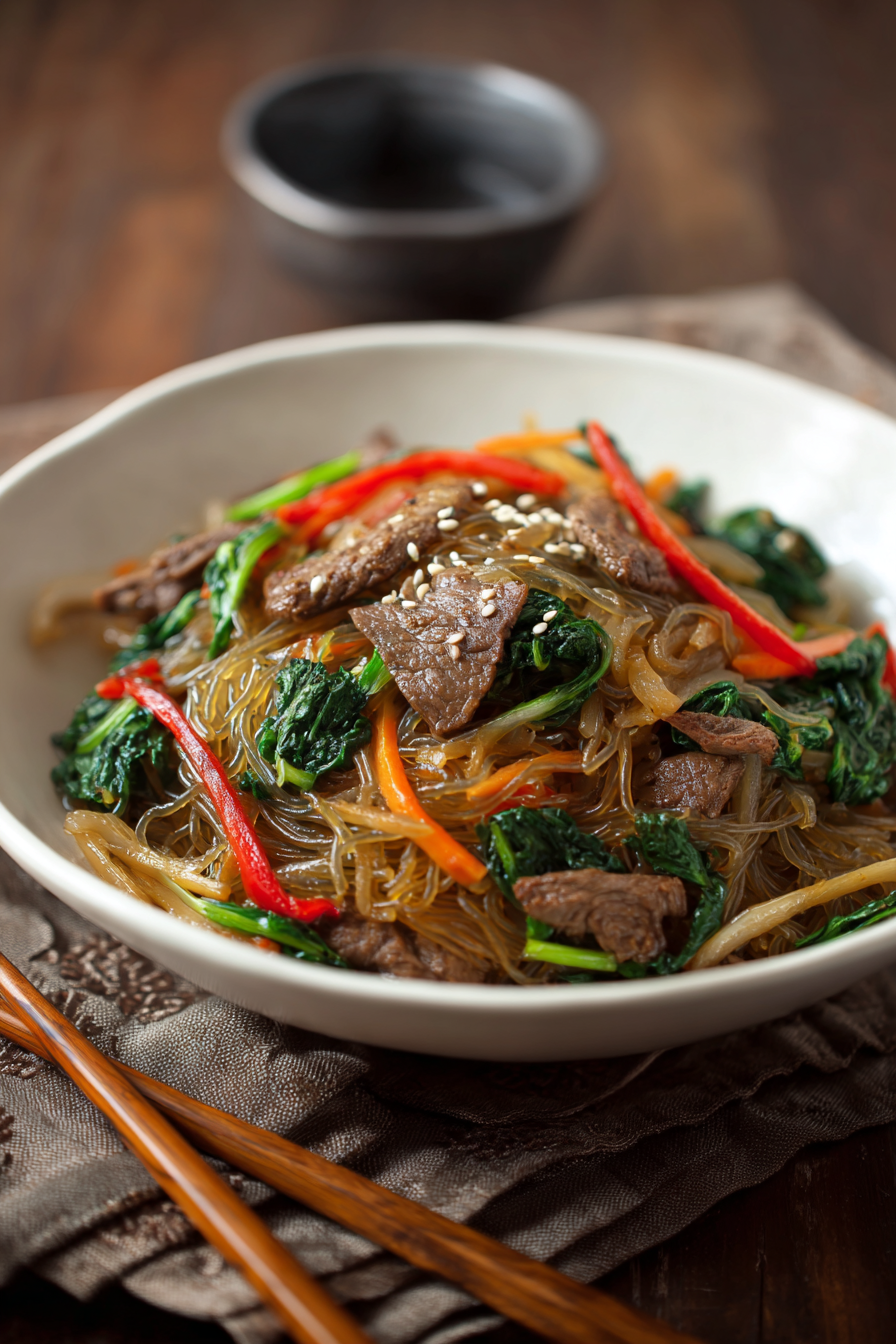
- In a medium bowl, combine thinly sliced beef with soy sauce, minced garlic, sugar, sesame oil, and black pepper.
- Stir thoroughly. Marinate for 15-20 minutes while preparing other ingredients.
Preparing the Vegetables Individually:
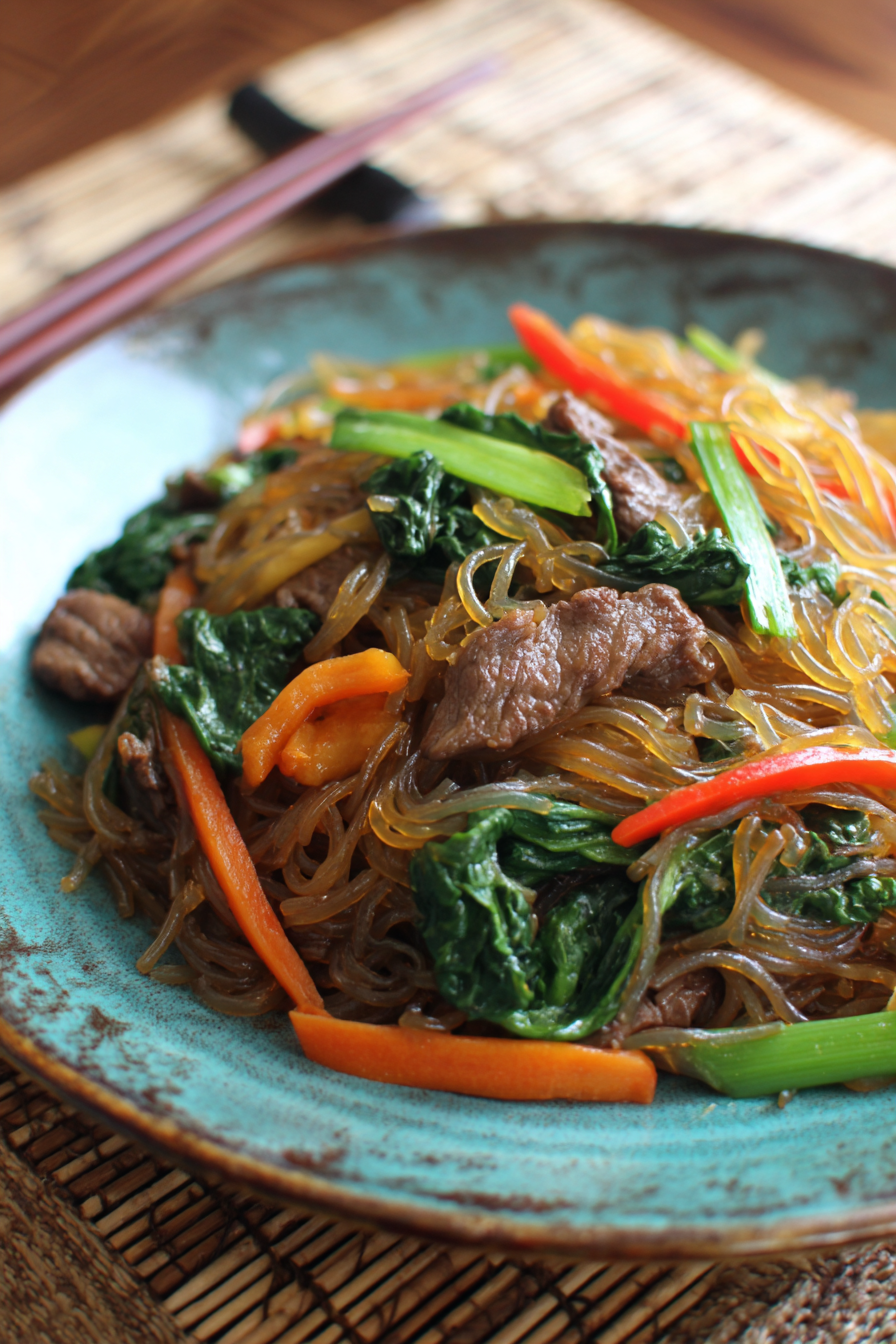
Cooking each vegetable separately maintains distinct textures, colors, and fresh flavors.
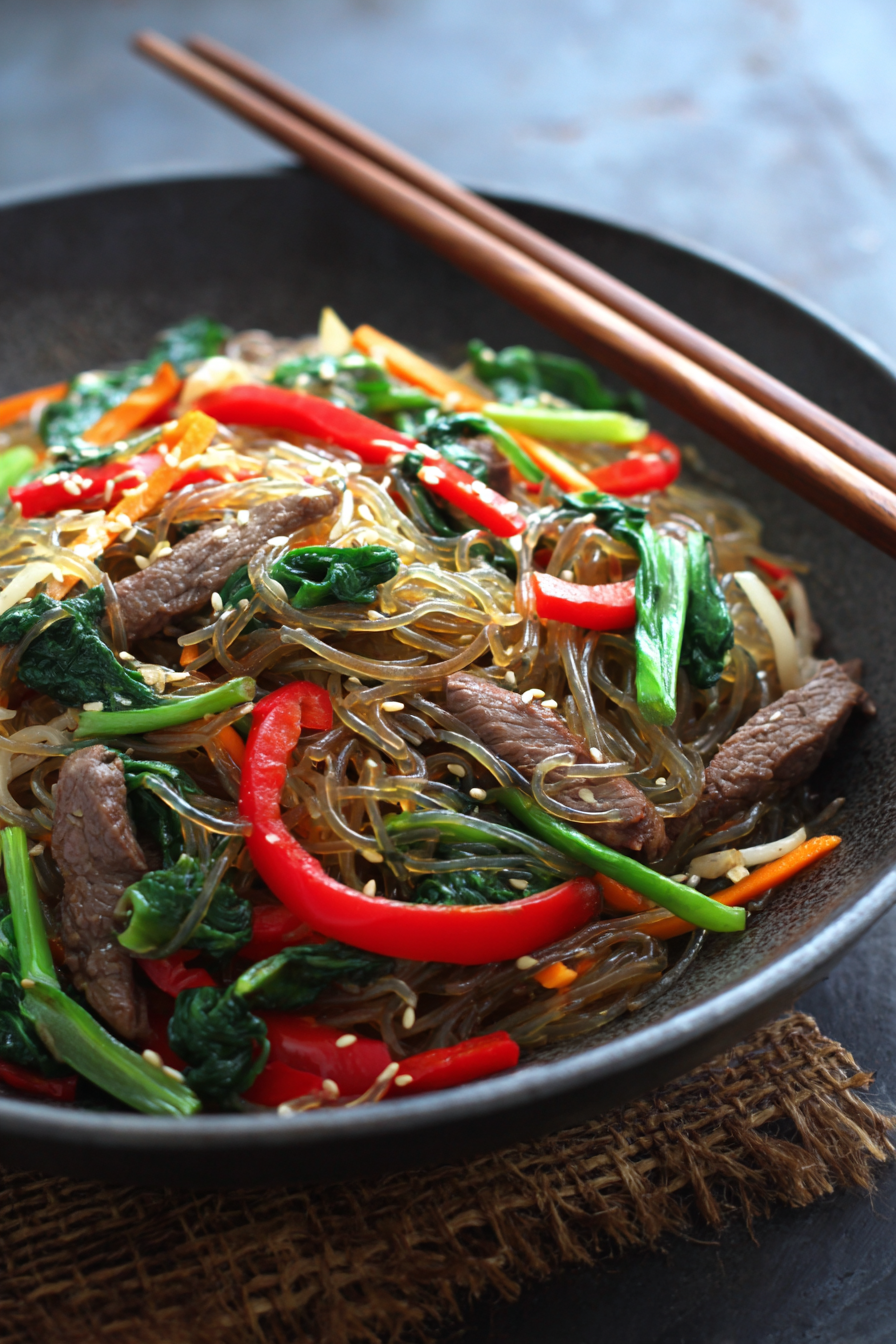
- Spinach: Blanch in boiling water for 30 seconds. Drain, rinse cold, squeeze out all water. Toss with a tiny drizzle of sesame oil and pinch of salt. Set aside.
- Carrots: Heat 1 tbsp cooking oil in a large skillet over medium-high heat. Sauté carrots for 2-3 minutes until tender-crisp. Remove to a very large mixing bowl.
- Onions: In the same skillet, sauté onions for 2-3 minutes until softened. Add to mixing bowl.
- Bell Peppers: Sauté red and yellow bell peppers for 2 minutes until tender-crisp. Add to mixing bowl.
- Mushrooms: Cook mushrooms until moisture is released and they brown, 3-5 minutes. Add to mixing bowl.
Cooking the Marinated Beef:
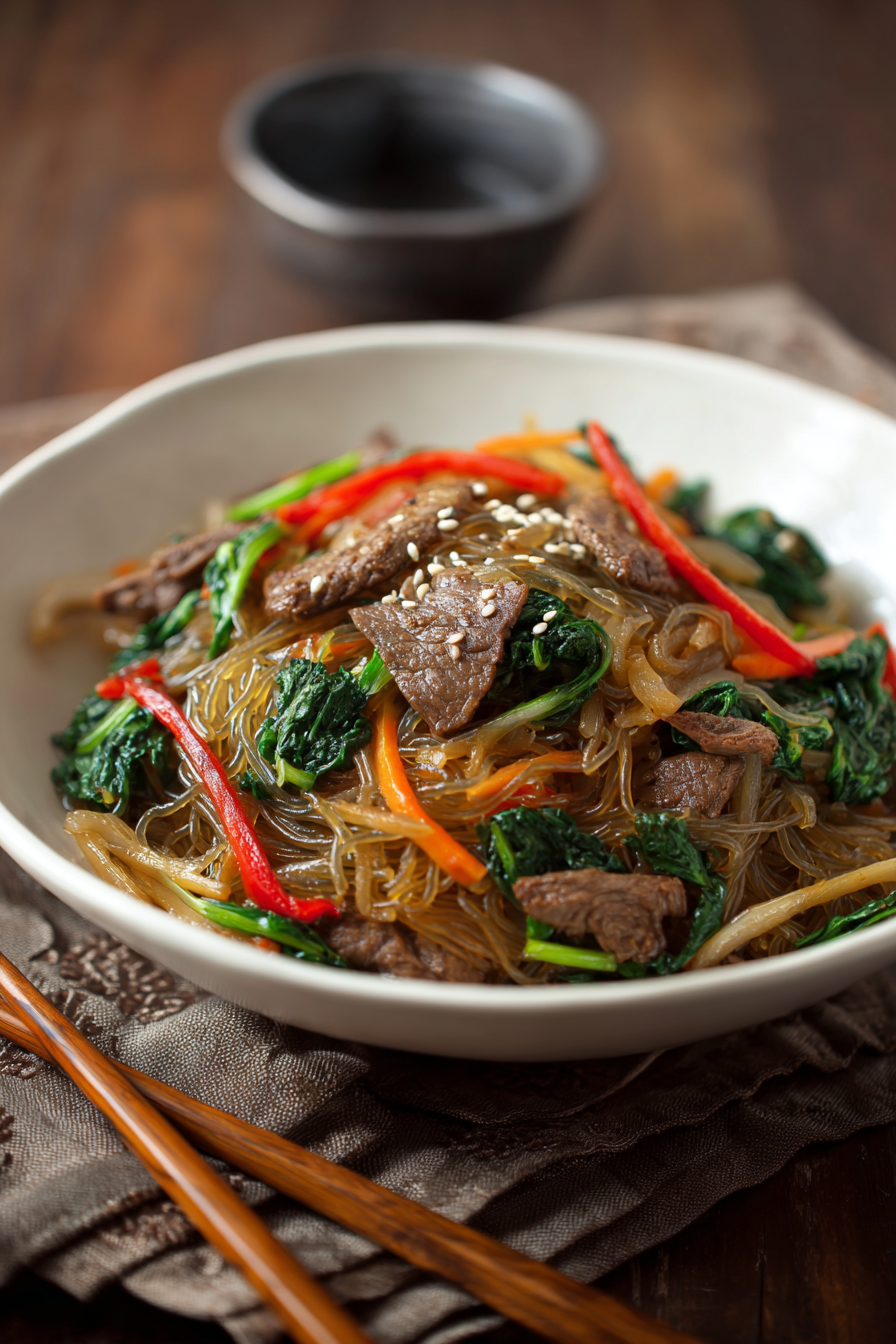
- Add a touch more cooking oil to the skillet if needed. Increase heat to medium-high.
- Stir-fry marinated beef for 3-4 minutes until cooked through and browned. Cook in batches if needed.
- Remove beef and add to your large mixing bowl with the prepared vegetables.
Cooking the Dangmyeon Noodles:
- Bring a large pot of water to a rolling boil.
- Cook Dangmyeon noodles according to package directions (usually 6-8 minutes) until translucent and perfectly chewy. Avoid overcooking.
- Drain noodles very well. Briefly rinse with warm water to prevent sticking.
- Immediately return drained noodles to the pot or transfer to a separate bowl. Toss with 1 tbsp sesame oil. This crucial step prevents clumping and adds flavor.
Assembling the Japchae:
Here’s where your hard work comes together! Evenly coat every ingredient in the savory-sweet sauce.
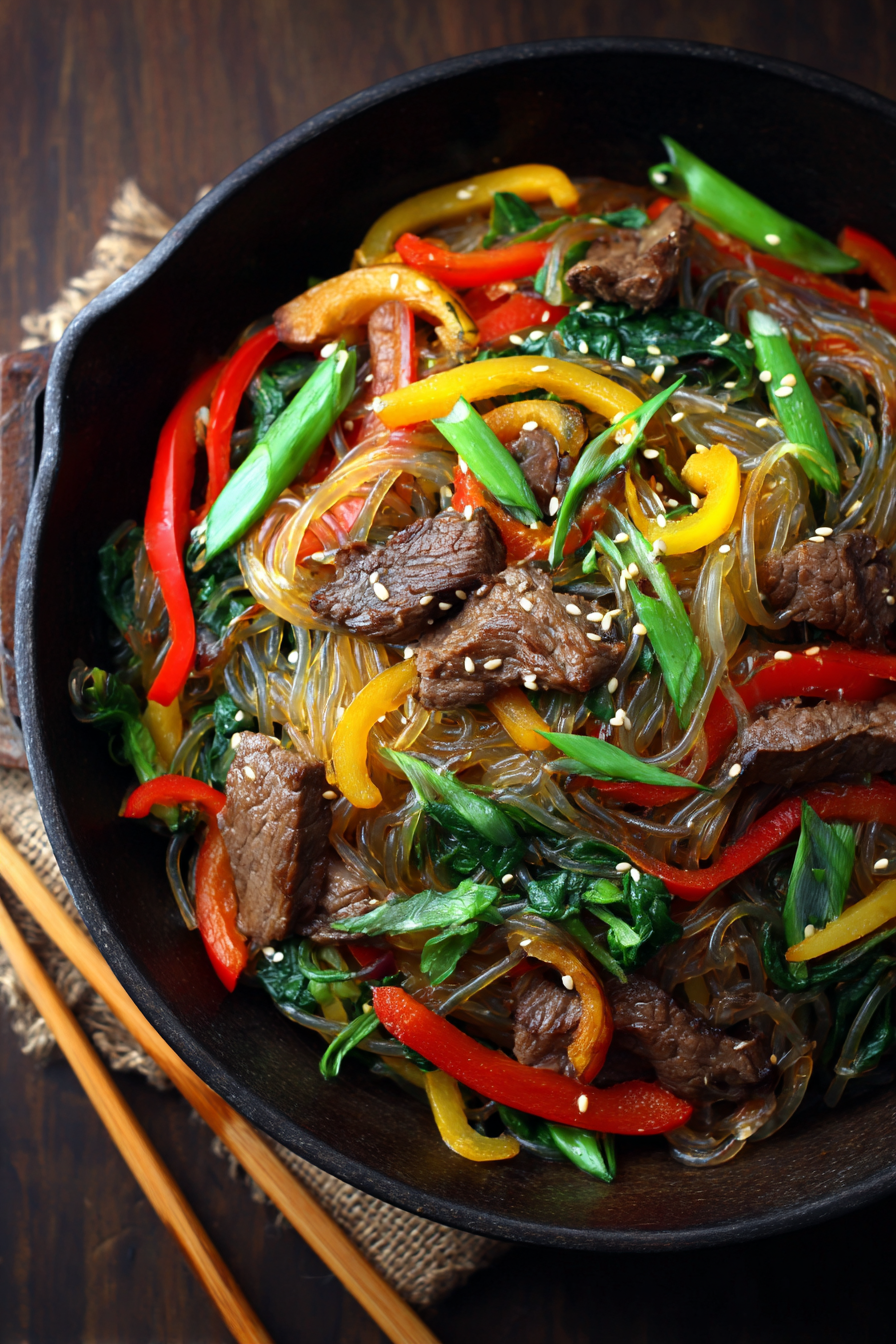
- Transfer the cooked, sesame-oil-tossed noodles into the very large mixing bowl with the beef and all sautéed vegetables.
- In a separate small bowl, whisk together all Japchae sauce ingredients: soy sauce, sugar, sesame oil, toasted sesame seeds, and black pepper. Stir until sugar dissolves.
- Pour the sauce evenly over the noodles and vegetables.
- Using clean hands (gloves recommended) or large tongs, gently but thoroughly toss everything together until every ingredient is evenly coated with the glossy sauce. This takes a few minutes.
- Taste and adjust seasoning if needed (more soy sauce for saltiness, sugar for sweetness).
Tips for Perfect Japchae & Common Mistakes
Achieving excellent Korean Japchae Noodles with Beef and Vegetables every time is simple with these smart techniques and by avoiding common pitfalls.
My Kitchen Secrets for Success:
- Mise en Place is Your Friend: Prep all ingredients before cooking; this recipe moves quickly.
- Cook Ingredients Separately: Ensures each vegetable cooks to its ideal texture and retains individual flavor.
- Mind the Noodles: Avoid overcooking glass noodles; chewy and springy is the goal, not mushy.
- Embrace the Hand Mix: Using clean hands (with gloves!) is best for gentle, thorough combining.
- Season in Layers: A pinch of salt and drizzle of sesame oil on blanched spinach or sautéed vegetables builds flavor throughout.
Common Mistakes to Avoid:
- Using the Wrong Noodles: Only Korean sweet potato starch noodles (dangmyeon) provide the correct texture.
- Not Squeezing Spinach Dry Enough: Excess water dilutes the sauce. Squeeze firmly!
- Forgetting to Toss Noodles with Sesame Oil: Noodles will clump without it.
- Over-Salting Early: Taste and adjust seasoning at the very end.
- Overcooking Vegetables: Keep vegetables tender-crisp, not soft.
Variations and Substitutions
Japchae is a forgiving dish that welcomes personal touches. Adapt it to what you have on hand or your dietary preferences while enjoying the core flavors of Korean Japchae Noodles with Beef and Vegetables.
- Vegetarian/Vegan Japchae: Omit beef. Increase mushrooms, or add pressed, pan-fried firm tofu, tempeh, or edamame. Ensure soy sauce is vegan-friendly.
- Other Protein Options: Thinly sliced chicken breast, shrimp, or pork tenderloin can replace beef. Marinate similarly. For chicken, consider trying a garlic mushroom chicken recipe alongside.
- Alternate Vegetables: Experiment with zucchini, green beans, napa cabbage, bok choy, or broccoli florets. Slice thinly and sauté tender-crisp.
- Add Some Heat: Mix a teaspoon of gochujang (Korean chili paste) into the sauce, or sprinkle red pepper flakes.
How to Store and Reheat Japchae
Japchae makes fantastic leftovers, often tasting even better the next day! This makes Korean Japchae Noodles with Beef and Vegetables excellent for meal prepping.
Storage:
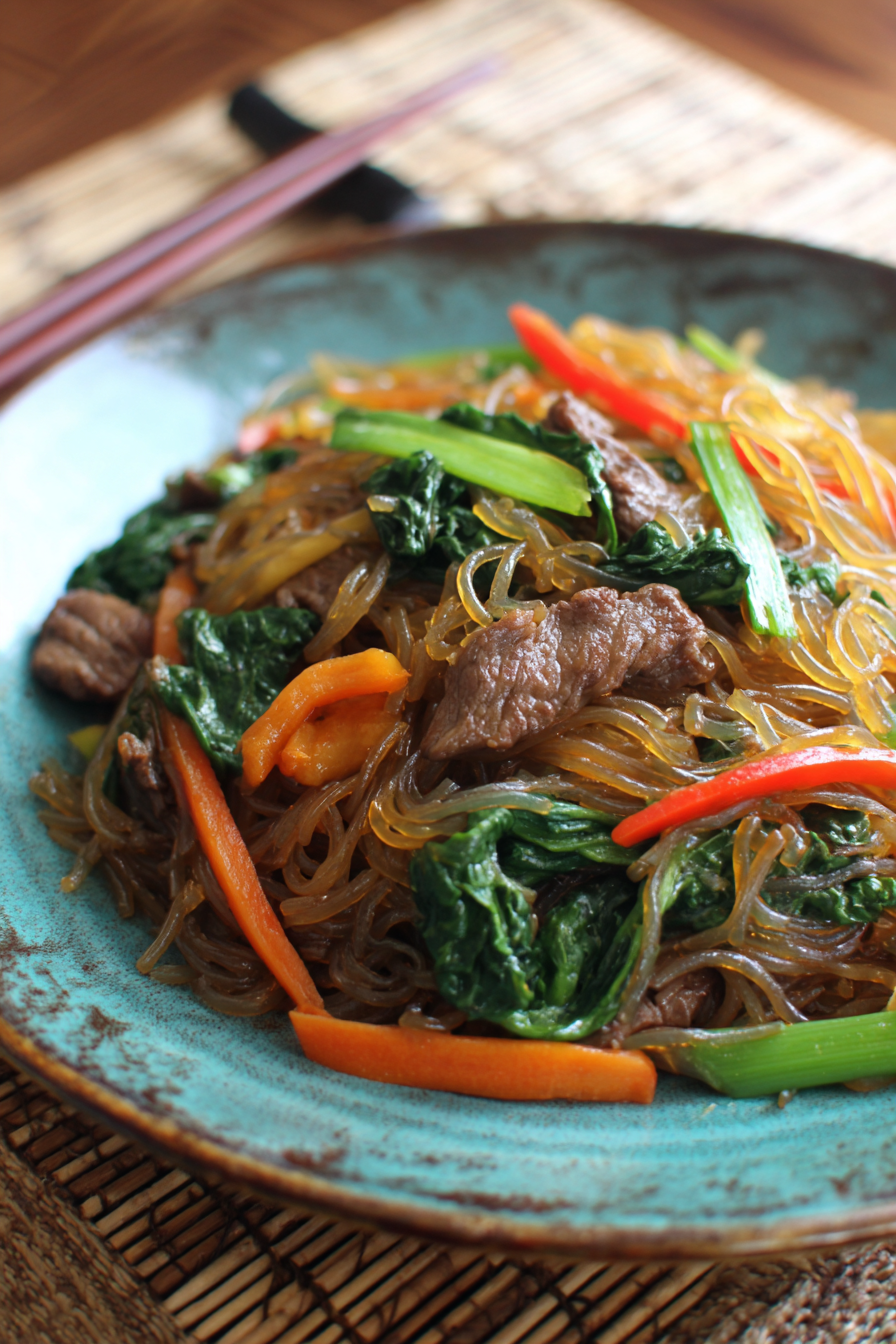
Once cooled, transfer Japchae to an airtight container. It keeps beautifully in the refrigerator for 3-4 days.
Reheating:
Gently reheat Japchae in a large skillet or wok over medium heat. Add a tiny splash of water or drizzle of sesame oil to revive noodles and prevent sticking. Stir-fry for a few minutes until heated through. You can also microwave, heating in 1-minute intervals and stirring.
Serving Suggestions
This Korean Japchae Noodles with Beef and Vegetables dish is substantial enough as a meal on its own, but also pairs wonderfully with other Korean specialties.
- Main Dish: Serve as a hearty main course.
- Side Dish: A popular banchan (side dish) at Korean BBQ. Pair with Korean BBQ beef or grilled meats.
- Accompaniments: Steamed white or brown rice is always good. Offer kimchi or pickled red onions for a tangy contrast.
- Garnish: A final sprinkle of fresh green onions or additional toasted sesame seeds.
Frequently Asked Questions About Japchae
Here are answers to common questions about making this delightful Korean noodle dish.
What kind of noodles should I use for Japchae?
You absolutely need to use *dangmyeon*, Korean sweet potato starch glass noodles. Their unique translucent appearance and incredibly chewy, bouncy texture are what make Korean Japchae Noodles with Beef and Vegetables special and cannot be replicated with other noodle types.
Can I make Japchae ahead of time for a party?
Yes, Japchae tastes wonderful made ahead! Flavors meld deeply overnight, perfect for potlucks or meal prepping. Store in an airtight container in the fridge and reheat gently.
Is Japchae typically spicy?
Traditionally, Japchae is not spicy. Its flavor profile is a harmonious balance of savory and sweet, with nutty undertones. If you prefer heat, you can add gochujang (Korean chili paste) or red pepper flakes to the sauce, as noted by sources like Maangchi.
Enjoy Your Homemade Japchae!
There you have it—your very own delicious, homemade Korean Japchae Noodles with Beef and Vegetables. This dish is truly a celebration of textures and flavors. Gather your ingredients, get cooking, and savor every delightful bite! Let us know how your Japchae turns out in the comments below!
Helpful References:
Korean Japchae Noodles with Beef and Vegetables Recipe
- Total Time: 40
- Yield: 4–6 servings 1x
Description
This classic Korean Japchae features bouncy sweet potato glass noodles, tender marinated beef, and an array of crisp, colorful vegetables. Everything is tossed together in a glossy, savory-sweet sauce that creates a harmonious blend of flavors and textures. It’s a delightful and satisfying dish perfect for a weeknight meal or a special occasion.
Ingredients
- 200g Dangmyeon (Korean sweet potato glass noodles)
- 250g beef sirloin or ribeye, thinly sliced
- 1 tbsp soy sauce (for beef marinade)
- 1 tsp sesame oil (for beef marinade)
- 1/2 tsp minced garlic (for beef marinade)
- Pinch black pepper (for beef marinade)
- 1 tbsp olive oil or vegetable oil
- 1 medium onion, thinly sliced
- 1 medium carrot, julienned
- 1 red bell pepper, julienned
- 1 cup fresh spinach, blanched and squeezed dry
- 4–5 shiitake mushrooms, sliced (or cremini)
- 2–3 cloves garlic, minced
- 2 tbsp soy sauce (for dressing)
- 2 tbsp sugar (for dressing)
- 1 tbsp sesame oil (for dressing)
- 1 tbsp mirin (rice wine) (for dressing)
- 1 tsp toasted sesame seeds
- Salt and pepper to taste
Instructions
- **Prepare the Beef:** In a medium bowl, combine the thinly sliced beef with 1 tablespoon soy sauce, 1 teaspoon sesame oil, 1/2 teaspoon minced garlic, and a pinch of black pepper. Mix well and let marinate for at least 15 minutes while you prepare other ingredients.
- **Cook the Noodles:** Bring a large pot of water to a rolling boil. Add the dangmyeon (glass noodles) and cook according to package directions, usually 6-8 minutes, until they are translucent and chewy. Drain the noodles and rinse them under cold water to prevent sticking. Toss with 1 teaspoon of sesame oil to keep them separate.
- **Prepare the Vegetables:** Heat 1 tablespoon of olive oil in a large wok or skillet over medium-high heat. Add the sliced onions and sauté for 2-3 minutes until softened. Add the julienned carrots and red bell pepper and cook for another 3-4 minutes until tender-crisp. Remove vegetables from the pan and set aside.
- **Cook the Mushrooms and Spinach:** In the same pan, add the sliced mushrooms and sauté for 3-4 minutes until browned. Add the blanched spinach and cook for 1-2 minutes, just until heated through. Remove vegetables and set aside with the others.
- **Cook the Beef:** Add the marinated beef to the hot pan and cook over medium-high heat, stirring frequently, until browned and cooked through, about 3-4 minutes. Break up any clumps.
- **Make the Dressing:** In a small bowl, whisk together 2 tablespoons soy sauce, 2 tablespoons sugar, 1 tablespoon sesame oil, 1 tablespoon mirin, and 2-3 cloves of minced garlic. Stir until the sugar dissolves.
- **Combine Everything:** In a very large bowl or directly in the wok, combine the cooked noodles, sautéed vegetables, cooked beef, and the prepared dressing. Add the toasted sesame seeds.
- **Toss and Serve:** Using tongs or your hands (wearing gloves), toss all ingredients thoroughly until the noodles and vegetables are evenly coated with the sauce. Taste and adjust seasoning with salt or pepper if needed. Serve warm or at room temperature.
Notes
- For extra flavor, lightly season each vegetable individually with a pinch of salt during cooking before combining with the noodles.
- To make prep easier, you can prepare the vegetables and dressing ahead of time. Store them separately in the refrigerator.
- The sweetness can be adjusted to your preference by modifying the amount of sugar in the dressing.
- Japchae tastes even better the next day, as the flavors have more time to meld.
- Prep Time: 10
- Cook Time: 30
- Category: Main Course
- Method: Stovetop, Mixing
- Cuisine: Korean
Nutrition
- Serving Size: 1.5 cups
- Calories: 420 kcal
- Sugar: 12 g
- Sodium: 850 mg
- Fat: 18 g
- Saturated Fat: 5 g
- Unsaturated Fat: 10 g
- Trans Fat: 0 g
- Carbohydrates: 45 g
- Fiber: 3 g
- Protein: 22 g
- Cholesterol: 45 mg
Keywords: Japchae, Korean noodles, glass noodles, sweet potato noodles, beef japchae, vegetable stir-fry, Asian noodles, Korean stir-fry, dinner recipe, savory-sweet, weeknight meal, authentic Korean