
In This Article:
- Why You Will Love This Steak and Veggies Recipe
- Why This Steak and Veggies Combination Shines
- Ingredients for Your Perfect Steak Dinner
- How to Make Steak with Roasted Veggies: Step-by-Step
- Expert Tips for the Best Results
- Steak & Veggie Variations and Substitutions
- Pairing Suggestions: What to Serve With Your Steak and Veggies
- Troubleshooting Common Issues
- Storing & Reheating Leftovers
- Quick Questions Answered
- Ready to Cook?
Why You Will Love This Steak and Veggies Recipe
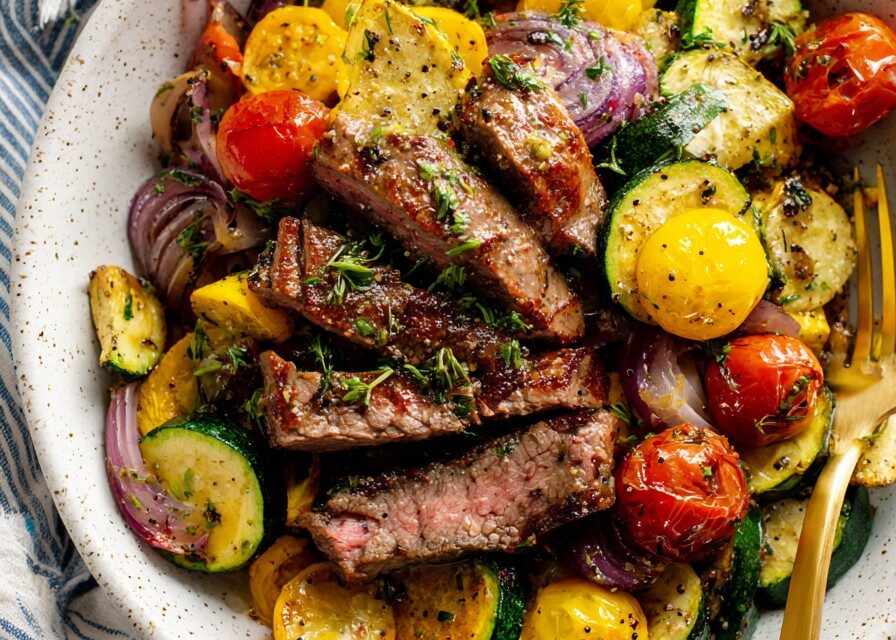
This isn’t just another dinner recipe; it’s a game-changer! You’ll absolutely love how easily this meal comes together, especially on busy weeknights. The combination of perfectly seared steak and richly flavored roasted vegetables means every bite is a delight.
Simple & Delicious
There’s nothing complicated about this recipe. You don’t need fancy equipment or a culinary degree to create a restaurant-worthy meal. The flavors are straightforward and satisfying, making it a crowd-plaser for all ages.
Hearty & Healthy
You’re getting a complete meal here. High-quality protein from the steak pairs beautifully with a generous portion of nutrient-packed vegetables. It’s satisfying without feeling heavy, ensuring you leave the table feeling great.
Easy Cleanup
Who enjoys a pile of dishes after dinner? This recipe streamlines the cooking process with minimal cleanup. Roasting the vegetables on one sheet pan keeps things tidy, letting you spend less time scrubbing and more time enjoying your delicious meal.
Why This Steak and Veggies Combination Shines
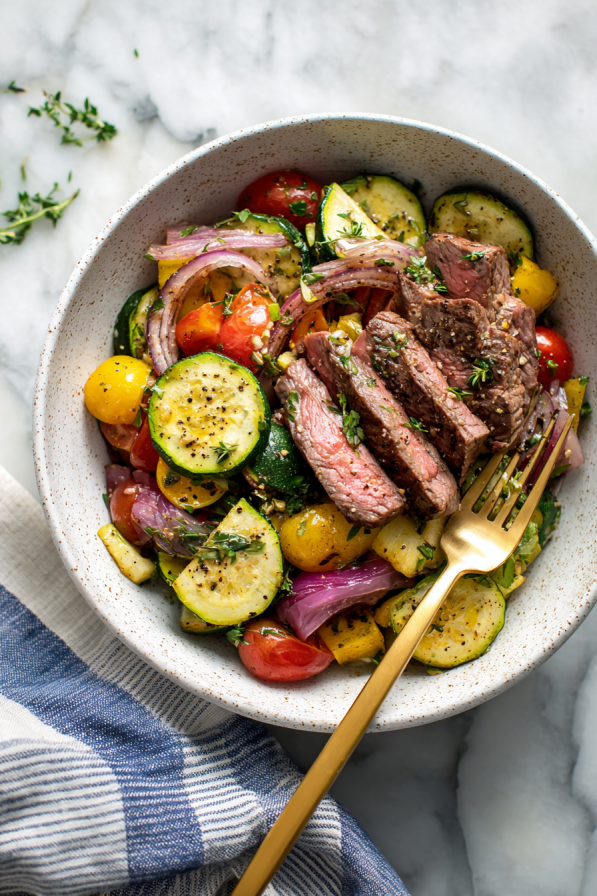
Forget endless pots and pans. This recipe is beloved for its simplicity, nutritional balance, and incredible flavor payoff. The rich, savory notes of a well-cooked steak perfectly complement the sweet, caramelized essence of roasted vegetables. It’s a complete meal minimizing cleanup while maximizing hearty satisfaction.
A Wholesome, Flavorful Meal
This dish combines lean protein with fiber-rich vegetables, providing a balanced and filling meal. The roasting process enhances the natural sweetness of the vegetables, creating a delicious contrast to the umami of the steak. You get everything you need for a satisfying dinner. The vibrant colors are also a feast for the eyes.
Weeknight Friendly, Weekend Impressive
Despite its gourmet appeal, the prep and cook times are surprisingly manageable, perfect for busy evenings. Yet, the outcome is elegant enough to impress dinner guests. The beauty of this recipe lies in its efficiency. While the vegetables are roasting, you’re preparing and searing your steak, making concurrent cooking stages highly effective. This parallel process cuts down on overall time. Plus, minimal cleanup means more time to relax.
Ingredients Recipe
Gathering quality ingredients is the first step to an outstanding meal. Here’s what you’ll need.
For the Steak
- Steak: 2 (1-inch thick) boneless ribeye, sirloin, or New York strip steaks (about 12-14 oz each). Look for good marbling for tenderness and flavor. Aim for steaks that are similar in thickness so they cook evenly.
- Olive Oil: 1-2 tablespoons, for searing. Use a good quality olive oil, or avocado oil for a higher smoke point.
- Salt & Black Pepper: To taste. Freshly cracked black pepper and coarse sea salt make a noticeable difference.
- Garlic: 2-3 cloves, minced or smashed. Adds aromatic depth to the pan drippings for basting.
- Fresh Rosemary/Thyme: 2-3 sprigs. These herbs infuse the steak with herbaceous notes and create an incredible aroma.
- Butter: 2 tablespoons, unsalted. For basting. This creates an incredibly rich, golden-brown crust and boosts flavor.
For the Roasted Vegetables
- Broccoli florets: 2 cups, cut into bite-sized pieces. Aim for pieces roughly 1-inch in size, ensuring they cook through consistently. Ensure they are completely dry before tossing with oil.
- Bell Peppers: 1 large (any color), deseeded and chopped into 1-inch pieces. Red, yellow, or orange peppers add sweetness and great color.
- Red Onion: 1/2 large, cut into wedges. The red onion caramelizes beautifully, adding a pop of color and mild sweetness.
- Cherry or Grape Tomatoes: 1 cup. Add these towards the end of roasting. They burst slightly, releasing juicy flavor that brightens the dish.
- Potatoes: 2 medium (Yukon Gold or red potatoes), scrubbed and cut into 1-inch cubes. Cut them evenly. Pre-boiling or microwaving potatoes for 5-7 minutes before roasting can significantly reduce cooking time.
- Olive Oil: 2 tablespoons. Enough to coat all the vegetables evenly for proper roasting and browning.
- Salt & Black Pepper: To taste. Generously season your vegetables before roasting.
- Garlic Powder: 1 teaspoon. Provides a mellow, roasted garlic flavor.
- Dried Herbs (Optional): 1/2 teaspoon Italian seasoning or dried oregano. These herbs add another layer of savory aroma and taste.
How to Make Step-by-Step
Follow these instructions to achieve perfectly cooked steak and tender, flavorful vegetables. This method ensures everything comes out beautifully at the same time.
Preparing Your Vegetables for Roasting
- Preheat Oven & Prep Pan: Preheat your oven to 400°F (200°C). Line a large baking sheet with parchment paper. If making a larger batch, use two baking sheets to avoid overcrowding.
- Chop Vegetables: Cut your broccoli, bell peppers, red onion, and potatoes into evenly sized, roughly 1-inch pieces. Uniform size is crucial for even cooking.
- Season Vegetables: In a large bowl, toss the chopped vegetables (excluding tomatoes) with 2 tablespoons of olive oil, 1 teaspoon garlic powder, 1/2 teaspoon salt, 1/4 teaspoon black pepper, and any optional dried herbs. Ensure all vegetables are lightly coated.
- Initial Roast: Spread the seasoned vegetables in a single layer on the prepared baking sheet. Roast for 15-20 minutes. This initial roast gives harder vegetables a head start.
Preparing and Searing the Steak
- Pat Steaks Dry: While vegetables pre-roast, remove steaks from the refrigerator and pat thoroughly dry with paper towels. This is critical as moisture prevents a good sear. Let them sit at room temperature for 20-30 minutes if possible for more even cooking.
- Season Steaks: Generously season both sides of each steak with coarse salt and freshly cracked black pepper. Press seasoning gently into the meat.
- Heat Skillet: Heat a heavy-bottomed skillet, preferably cast iron, over medium-high heat for 3-5 minutes until very hot. A piping hot pan is key for a deep sear.
- Add Oil: Add 1-2 tablespoons of olive oil to the hot skillet. Swirl to coat. The oil should shimmer, indicating it’s hot enough.
- Sear Steaks: Carefully place seasoned steaks into the hot skillet. Sear for 2-3 minutes per side for a beautiful, deep brown crust. Resist the urge to move them.
- Add Aromatics & Butter: Reduce heat to medium. Add butter, minced garlic, and fresh rosemary/thyme sprigs to the skillet. Tilt the pan slightly and use a spoon to continuously baste melted butter and pan drippings over the steaks for another 1-2 minutes, flipping once.
Finishing the Dish Together
- Combine & Finish Roasting: After the initial vegetable roasting time (15-20 minutes), remove the baking sheet from the oven. Gently toss vegetables and make space. Carefully transfer seared steaks from the skillet to the baking sheet, nestling them among the vegetables. Scatter cherry tomatoes over the vegetables.
- Return to Oven: Return the baking sheet to the oven and continue roasting for another 8-15 minutes, depending on desired steak doneness and vegetable tenderness. Use a reliable meat thermometer to check the internal temperature of the steak.
- Rest the Steak: Once cooked, remove steaks and vegetables from the oven. Transfer steaks to a cutting board and let them rest for at least 5-10 minutes before slicing. This allows juices to redistribute.
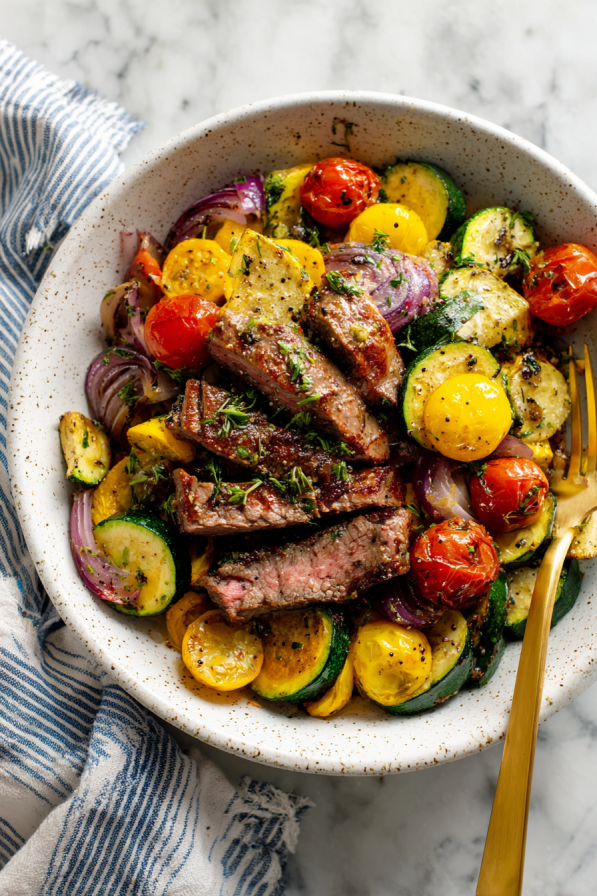
- Serve: Slice the rested steak against the grain into 1/2-inch thick pieces. Serve immediately with the roasted vegetables. Garnish with fresh parsley or chives if desired.
Expert Tips for the Best Results
Achieving that perfect restaurant-quality result at home means paying attention to a few key details. These tips truly make a difference.
Proper Steak Temperature
Let your steaks come to room temperature for 20-30 minutes before searing. A cold steak hitting a hot pan sears unevenly. Room temperature allows for a more even cook and a more tender finished product.
Don’t Overcrowd the Pan
This applies to both the skillet when searing steak and the baking sheet for vegetables. Overcrowding drops the pan temperature, leading to steaming instead of searing or roasting. For vegetables, this means soft, pale veggies instead of beautifully caramelized ones. If you have a lot, use two baking sheets.
The Importance of the Sear
Heat your skillet until it’s really hot—almost smoking. That initial high heat creates an incredible, crusty Maillard reaction on your steak. Patting the steak dry removes surface moisture, which also helps achieve a proper sear. A deep, dark brown crust is what you’re aiming for; this is where delicious savory flavor develops.
Rest Your Steak
This is non-negotiable. Resting allows muscle fibers to relax and reabsorb juices that have migrated to the center during cooking. Cutting into a steak too soon will result in juices running out. 5-10 minutes is ideal; use foil loosely tented over it to keep it warm.
Taste and Adjust Seasoning
Always taste your vegetables after roasting and before serving. Sometimes they need a final sprinkle of salt or a crack of fresh pepper. A squeeze of lemon juice or a dash of fresh herbs right before serving can also brighten flavors.
Steak & Veggie Variations and Substitutions
This Recipe is incredibly versatile. Don’t be afraid to experiment with different cuts of meat or seasonal vegetables.
Steak Cuts
- Less Expensive Cuts: If ribeye or New York strip are outside your budget, consider flank steak or sirloin. For flank steak, marinate it first for at least 30 minutes in a simple mixture of olive oil, soy sauce, garlic, and a touch of acid. Cook quickly and slice thinly against the grain.
- Thicker Steaks: If you opt for steaks thicker than 1 inch, sear them for an additional minute per side and extend the oven time by 3-5 minutes, always checking with a meat thermometer.
Vegetable Swaps
- Root Vegetables: Carrots, parsnips, or sweet potatoes are fantastic roasted. Cut them into similar 1-inch pieces. They generally need a little longer to cook, so add them to the oven 5-10 minutes before any faster-cooking vegetables.
- Green Beans or Asparagus: These cook much faster. Add them to the baking sheet during the last 10-15 minutes of roasting to prevent them from becoming mushy.
- Mushrooms: Sliced cremini or shiitake mushrooms add an earthy flavor. Roast them alongside other vegetables from the start.
- Seasonal Produce: Consider what’s fresh at your local market. Zucchini and summer squash are great in warmer months but, like green beans, add them later in the roasting process. Brussels sprouts are another excellent choice.
Flavor Boosters
- Spice Rubs: Instead of just salt and pepper, try a dry rub on your steak before searing. Paprika, chili powder, cumin, and onion powder can add depth. An espresso rub can also add complex, robust notes.
- Sauces: A quick pan sauce made with red wine, beef broth, and a pat of butter after the steak is done resting can really elevate the meal. Or, a simple chimichurri or pesto can brighten up both the steak and vegetables. For an impressive shrimp recipe, a similar basting technique makes all the difference.
- Cheese: A sprinkle of freshly grated Parmesan or crumbled feta over the roasted vegetables right before serving can add a tangy, salty kick. Goat cheese crumbles would also melt slightly.
- Citrus: A squeeze of fresh lemon juice over the finished dish adds brightness and cuts through the richness. For another bright, zesty dish, try quick pickled red onions with a citrus twist.
- Herbs: Consider a final sprinkle of fresh parsley, chives, or basil over the finished dish. Fresh herbs add a pop of color and a fresh aroma.
Pairing Suggestions: What to Serve With Your Steak and Veggies
Recipe is a complete meal on its own, certain pairings can enhance the dining experience and balance the flavors beautifully.
Complementary Sides
- Crusty Bread: A simple, crusty baguette or sourdough is perfect for soaking up any delicious juices.
- Simple Salad: A light, refreshing green salad with a vinaigrette dressing can provide a lovely tangy contrast. Think mixed greens with cucumber, cherry tomatoes, and a lemon-herb dressing.
- Quinoa or Brown Rice: For additional complex carbohydrates, a small serving of cooked quinoa or brown rice offers a nutty, satisfying base.
- Mashed Potatoes (Alternative to Roasted): If you prefer a creamier texture, a side of garlic mashed potatoes offers a comforting and classic pairing.
Beverages
- Red Wine: A robust red wine is a natural companion for steak. Cabernet Sauvignon, Merlot, Malbec, or a Syrah/Shiraz would all be excellent choices.
- Craft Beer: For beer enthusiasts, a stout, porter, or a hoppy IPA can stand up to the bold flavors.
- Non-Alcoholic Options: Sparkling water with a slice of lemon or lime provides a refreshing palate cleanser. Iced tea or a cranberry spritzer can also be delightful.
Troubleshooting Common Issues
Even experienced cooks encounter hiccups. Here are some common issues you might face with this recipe and how to fix them.
Steak Not Searing Properly
- Issue: Pale, gray steak instead of a deep brown crust.
- Solution: The pan wasn’t hot enough, or the steak wasn’t dry enough. Ensure your skillet is screaming hot and pat steaks absolutely dry. Don’t overcrowd the pan.
Vegetables Are Soggy, Not Crispy
- Issue: Vegetables are fully cooked but soft and watery.
- Solution: The baking sheet was overcrowded, causing vegetables to steam. Use two baking sheets if needed, ensuring vegetables are spread in a single layer. Make sure vegetables are completely dry after washing.
Steak Is Dry or Tough
- Issue: Despite proper cooking, steak lacks juiciness or is hard to chew.
- Solution:
- Not Resting: Always rest your steak for 5-10 minutes after cooking. This is crucial for juiciness.
- Overcooked: Use a meat thermometer to ensure you aren’t exceeding your desired internal temperature.
- Cut Against the Grain: Ensure you are slicing the steak against the grain (perpendicular to muscle fibers).
Unevenly Cooked Vegetables
- Issue: Some vegetables are burnt while others are still hard.
- Solution: This usually indicates uneven chopping or improper distribution. Cut all vegetables into similar 1-inch pieces. Distribute them evenly on the baking sheet. If certain vegetables need longer, give them a head start.
Storing & Reheating Leftovers
No one wants to waste a good meal, and this Steak with Roasted Veggies Recipe makes for excellent leftovers with a little care.
Storing
Allow any leftover steak and vegetables to cool completely at room temperature (no more than 2 hours) before transferring them to an airtight container. Keep the steak and vegetables separate if possible, as they reheat differently. Store in the refrigerator for up to 3-4 days.
Reheating
- Steak: Reheating steak can be tricky to avoid drying it out. Gently warm slices in a skillet over low heat with butter or beef broth until just warmed through. Alternatively, warm it in the oven at 250°F (120°C) wrapped in foil for 10-15 minutes.
- Vegetables: Spread roasted vegetables on a baking sheet and reheat in an oven or toaster oven at 350°F (175°C) for 5-10 minutes, or until warmed through and slightly crisp again. Avoid the microwave if you want to maintain texture.
Quick Questions Answered
How do I know when my steak is done?
Use an instant-read meat thermometer. Insert it into the thickest part of the steak. For medium-rare, aim for 130-135°F (54-57°C); for medium, 135-140°F (57-60°C); for medium-well, 140-145°F (60-63°C). Remember the temperature will rise slightly while resting.
Can I use frozen vegetables?
Yes, you can use frozen vegetables like broccoli or bell peppers. Do not thaw them first. Toss them directly with oil and seasonings. Note that they might release more water and may not caramelize as intensely as fresh. Increase roasting time by 5-10 minutes if needed.
What’s the best way to get a good sear on my steak?
Achieving a good sear requires a very hot, heavy-bottomed skillet (cast iron works best) and thoroughly patting your steak dry before seasoning. Any moisture on the steak surface prevents browning. Use an oil with a high smoke point and don’t overcrowd the pan.
Can I prepare parts of this meal ahead of time?
You can wash and chop all your vegetables a day in advance and store them in airtight containers in the refrigerator. Season the steak just before cooking. This simple prep ahead can shave valuable minutes off your dinner routine. For other convenient meals, an easy Chicken Parmesan Pasta Recipe also benefits from some upfront prep.
What kind of olive oil should I use for roasting and searing?
For roasting vegetables, a good quality extra virgin olive oil is fine. For searing steak, you might prefer a refined olive oil or avocado oil, which have higher smoke points than extra virgin olive oil, reducing the chance of burning.
Ready to Cook?
This Steak with Roasted Veggies Recipe is more than just a meal; it’s a testament to how simple, quality ingredients, prepared with a little care, can create something truly special. Each bite of perfectly seared steak paired with tender, flavorful vegetables is a comforting delight. I hope this recipe brings as much joy and satisfaction to your table as it has to mine. It’s truly a dish that turns an ordinary evening into something memorable. Enjoy the process, savor the aromas, and relish the incredible taste of a homemade, perfectly cooked meal. Happy cooking!
More Recipes You’ll Enjoy:
- 12 Year Secret To Perfect Peach Jalapeno Jam No Pectin
- 15 Minute Sparkling Strawberry Basil Lemonade
- 20 Minute No Bake Key Lime Cheesecake Bars
- 27 Tested Avocado Toast With Grilled Corn Chili Flakes
- 30 Minute Chicken Parmesan Pasta Recipe
Helpful References:
Steak with Roasted Veggies Recipe
- Prep Time: 10
- Cook Time: 30
- Total Time: 40
- Yield: 2 servings 1x
- Category: Main Course
- Method: Roasting, Stovetop
- Cuisine: American
Description
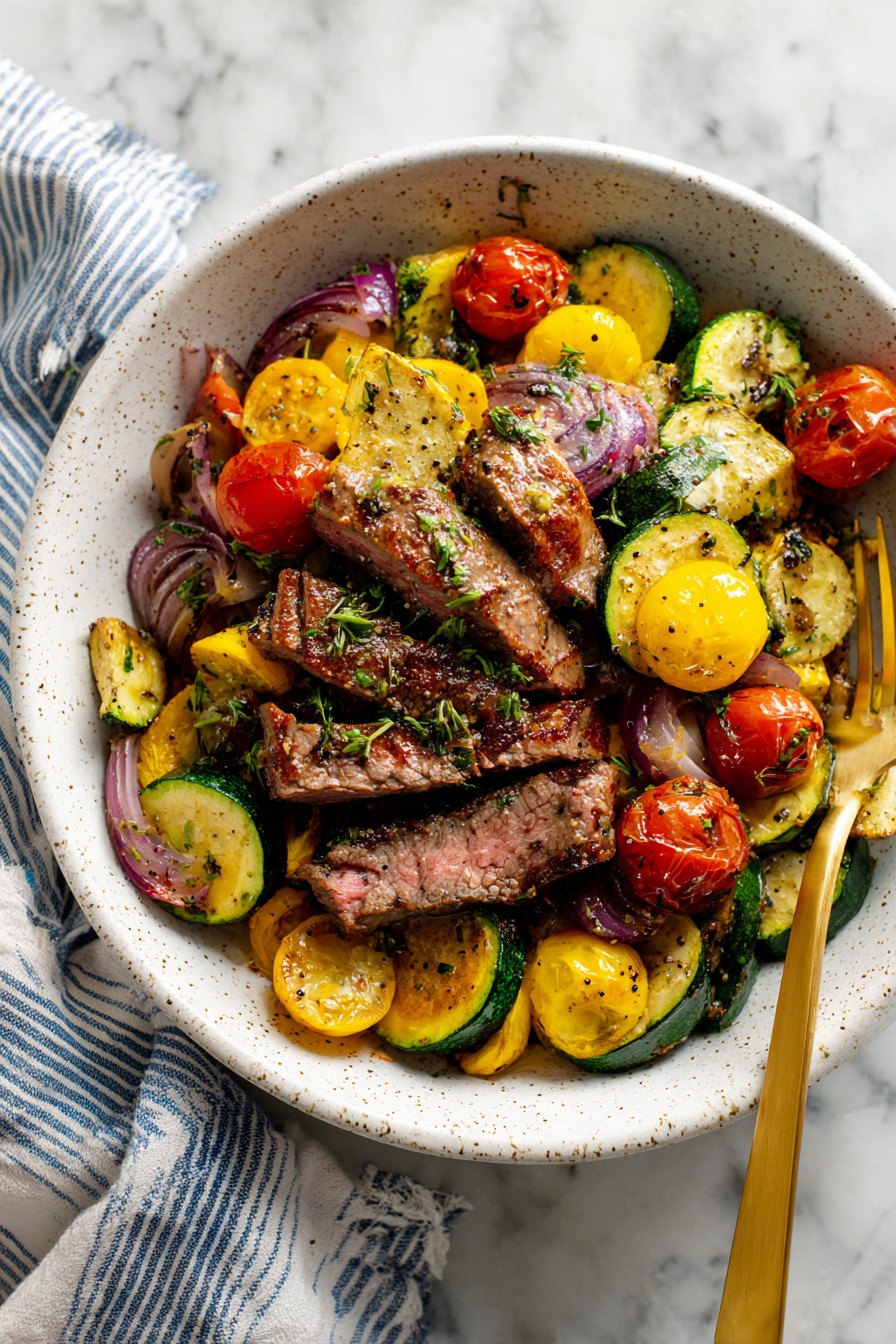
This recipe delivers perfectly seared steak and tender, flavorful roasted vegetables, making it an ideal weeknight dinner or an impressive weekend feast. You’ll achieve a beautiful crust on your steak and perfectly caramelized vegetables, all with minimal cleanup. It’s a meal that feels indulgent yet is surprisingly simple to prepare.
Ingredients
- 2 (1-inch thick) steaks (such as sirloin, ribeye, or flank steak)
- 1 tablespoon olive oil
- 1 teaspoon salt
- ½ teaspoon black pepper
- 1 large head broccoli, cut into florets
- 2 carrots, peeled and sliced
- 1 red bell pepper, cored and chopped
- 1 red onion, cut into wedges
- 2 tablespoons olive oil
- ½ teaspoon salt
- ¼ teaspoon black pepper
- Optional: 2 cloves garlic, minced
- Optional: Fresh herbs for garnish (thyme, rosemary, or parsley)
Instructions
- Preheat oven to 400°F (200°C). Line a large baking sheet with parchment paper for easier cleanup. If using two baking sheets, divide vegetables evenly.
- In a large bowl, combine the broccoli florets, sliced carrots, chopped red bell pepper, and red onion wedges. Drizzle with 2 tablespoons of olive oil, ½ teaspoon salt, and ¼ teaspoon black pepper. Toss until the vegetables are evenly coated. If using, add minced garlic at this stage.
- Spread the seasoned vegetables in a single layer on the prepared baking sheet. Ensure they are not overcrowded to allow for proper roasting and caramelization.
- Roast the vegetables in the preheated oven for 20-25 minutes, or until tender-crisp and slightly caramelized. You should see some browning on the edges.
- While the vegetables are roasting, prepare the steak. Pat the steaks dry thoroughly with paper towels. This is crucial for achieving a good sear.
- Season both sides of the steaks generously with 1 teaspoon of salt and ½ teaspoon of black pepper. You can also rub them with 1 tablespoon of olive oil before seasoning.
- Heat a large cast-iron skillet or heavy-bottomed pan over medium-high heat until it is smoking slightly, about 3-5 minutes. Add the seasoned steaks to the hot pan.
- Sear the steaks for 3-5 minutes per side for medium-rare, or longer for desired doneness. A beautiful brown crust should form. For thicker steaks, you can finish them in the oven with the vegetables for a few minutes if needed.
- Once cooked to your liking, remove the steaks from the skillet and place them on a cutting board. Tent them loosely with foil and let them rest for at least 5-10 minutes. Resting allows the juices to redistribute, resulting in a more tender and flavorful steak.
- After resting, slice the steaks against the grain. Serve the sliced steak immediately alongside the roasted vegetables. Garnish with fresh herbs if desired.
Notes
- For a spicier kick, add a pinch of red pepper flakes to the vegetables before roasting.
- Consider adding other vegetables like asparagus, zucchini, or cherry tomatoes to the mix. Adjust roasting time as needed based on vegetable density.
- To make this a complete meal, consider serving with a side of Chicken Parmesan Pasta Recipe or a simple green salad.
- Leftovers can be stored in an airtight container in the refrigerator for up to 3 days. Reheat gently in a skillet or microwave to avoid overcooking the steak.
Nutrition
- Array