
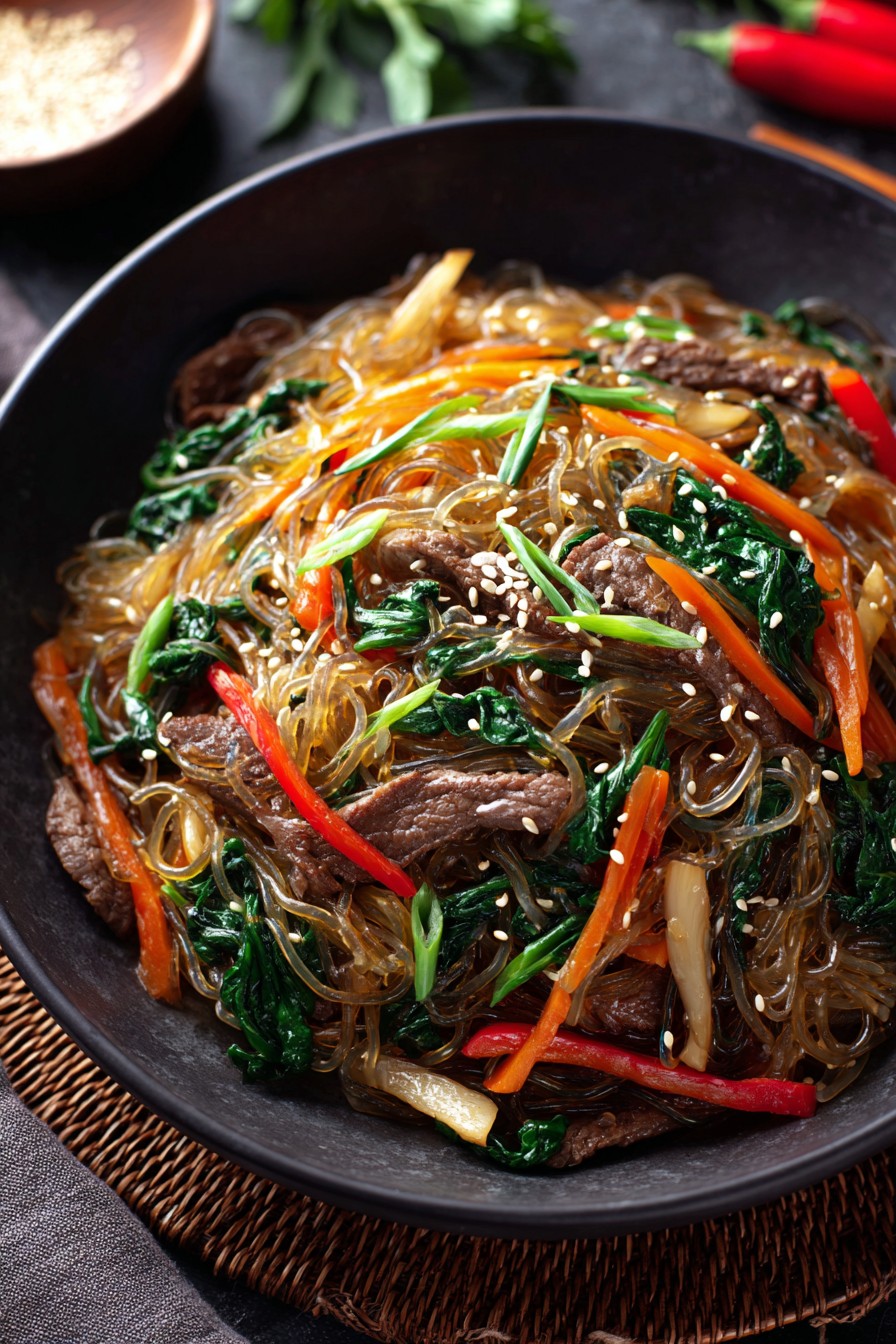
Korean Japchae Noodles with Beef and Vegetables
Looking for a wonderfully balanced meal that’s both savory and sweet, with an irresistible chewy texture? This guide shows you how to make authentic Korean Japchae Noodles with Beef and Vegetables right in your kitchen. Featuring springy glass noodles, tender marinated beef, and a vibrant medley of stir-fried vegetables, all tossed in a delicious soy-sesame sauce, this dish is a flavorful and satisfying meal that’s easier to prepare than you might think! This beloved Korean noodle dish is a feast for the senses, perfect for a comforting weeknight dinner or a special gathering. You’ll love how quickly it comes together once your ingredients are prepped!
In This Article:
- Why You’ll Love This Japchae Recipe
- Essential Ingredients for Japchae
- Prepping Your Japchae Components
- Step-by-Step Guide to Making Japchae
- Tips for Perfect Japchae Noodles
- Troubleshooting Common Japchae Issues
- Recipe Variations & Substitutions
- Serving Suggestions for Japchae
- Storing & Reheating Japchae Leftovers
- Common Japchae Questions
- Ready to Make Japchae?
Why You’ll Love This Japchae Recipe
Japchae instantly became a favorite in my home, and I’m sure it will in yours too. It’s a complete meal in one bowl, offering a fantastic harmony of textures and flavors. This recipe for Korean Japchae Noodles with Beef and Vegetables helps you achieve that signature bouncy texture of sweet potato glass noodles, infused with a rich soy-sesame dressing. It’s perfectly complemented by thinly sliced, savory beef and a colorful selection of crisp-tender vegetables.
This dish is satisfying and well-balanced, always getting compliments whether served as a comforting weeknight dinner or for a special gathering. The best part? It looks impressive but is totally achievable for any home cook. Plus, it’s a great way to use a variety of vegetables you might have on hand, making it incredibly versatile. Its naturally gluten-free noodles (made from sweet potato starch) are a bonus for those with dietary considerations, though you’ll need to use tamari for a fully gluten-free dish. The combination of sweet, savory, and umami notes, along with the distinct chewiness of the glass noodles, creates an experience that’s truly unique and incredibly delicious.
Essential Ingredients for Korean Japchae Noodles
Before we start cooking, let’s gather your ingredients. Using quality items, especially for the noodles and sesame oil, truly makes a difference in the final taste of your Japchae. Most of these can be found at an Asian market or a well-stocked grocery store.
For the Beef Marinade:
- Soy Sauce: I recommend low-sodium soy sauce for more control over saltiness. For a gluten-free version, substitute with tamari.
- Sesame Oil: *Toasted* sesame oil is key for its deep, nutty aroma. Un-toasted sesame oil will not provide the same depth of flavor.
- Minced Garlic: Freshly minced garlic provides a potent, aromatic base. Avoid garlic powder here for the best results.
- Brown Sugar: Helps tenderize the beef and adds subtle sweetness to the marinade, contributing to that characteristic Japchae balance.
- Black Pepper: Freshly ground black pepper for warmth and a little kick.
For the Glass Noodles (Dangmyeon):
- Korean Sweet Potato Starch Noodles (Dangmyeon): These clear, springy noodles are the heart of Japchae. They absorb flavors wonderfully and are naturally gluten-free. Always check the package for specific boiling instructions, as times can vary slightly by brand. They typically come in bundles or flat squares.
- Soy Sauce: Seasons the cooked noodles themselves, building another layer of savory flavor directly into the core of the dish.
- Sesame Oil: Toasted sesame oil is tossed with cooked noodles to prevent sticking and infuse a signature nutty taste that is absolutely essential for Japchae.
- Sugar: A small amount tossed with noodles gives them a fantastic sheen and subtle sweetness, important for authentic Japchae’s balanced flavor profile.
For the Beef:
While often made with beef, you can also substitute other proteins or omit for a vegetarian version. Flank steak, sirloin, or ribeye are excellent choices. Look for cuts that are easy to slice thinly against the grain. When selecting beef, look for well-marbled pieces for maximum tenderness and flavor. Aim for about ½ pound of beef for a recipe this size, which provides a good balance without overpowering the vegetables and noodles.
For the Vegetables:
- Spinach: Fresh spinach is traditional. Pre-washed baby spinach is convenient and cooks down quickly. You can also use regular spinach, just ensure you wash it thoroughly. Using Asian spinach (sigeumchi) if available, offers a slightly sweeter and more tender leaf.
- Carrot: Julienne cut carrots add vibrant color and a sweet crunch. Opt for fresh, firm carrots for the best texture.
- Onion: Thinly sliced yellow or white onion provides an aromatic, sweet base when stir-fried.
- Bell Pepper (Red & Yellow): Add beautiful color, sweetness, and crispness. Slice them into thin strips, matching the other vegetables. Green bell peppers can also be used, but red and yellow offer more sweetness and a milder flavor.
- Shiitake Mushrooms: Use fresh or rehydrated dried shiitake mushrooms, sliced thinly. They contribute an earthy, umami depth that significantly enhances the dish. If using dried, remember to rehydrate them first and squeeze out excess water to concentrate their flavor. The stems of dried shiitake are often too tough to eat but can be saved to flavor broths.
- Cooking Oil: A neutral oil like canola, vegetable, grapeseed, or even a light olive oil is best for stir-frying. Avoid strong-flavored oils that might overpower the delicate Japchae flavors.
For the Japchae Sauce (Final Dressing):
- Soy Sauce: The foundation of our umami-rich dressing. Again, low-sodium or tamari for gluten-free.
- Sugar: Balances savory notes and provides the sauce’s characteristic sweet undertone, which is crucial for authentic Japchae flavor. Granulated sugar or light brown sugar both work well here.
- Sesame Oil: Another splash of toasted sesame oil here amplifies the nutty aroma, tying all the flavors together. This final drizzle is essential for the characteristic Japchae fragrance.
- Garlic: More fresh minced garlic for an extra kick of flavor in the final sauce, providing brightness and pungency.
- Black Pepper: To round out the seasoning and add a subtle warmth.
- Sesame Seeds (toasted): Used for garnish and a subtle crunch. Don’t skip these; they add a professional finishing touch and an extra layer of nutty flavor and visual appeal.
Prepping Your Japchae Components
My best advice for making Japchae feel less daunting is to prepare all your ingredients before you start cooking. This ‘mise en place’ method will make your cooking experience much smoother and more enjoyable, especially with a dish that has so many components. This also helps ensure consistent cooking times and prevents over or under-cooking.
Prepping the Beef:
- Slice the Beef: Thinly slice your beef (sirloin, ribeye, or flank steak work well) against the grain for tenderness. Partially freezing the beef for 20-30 minutes makes slicing much easier and more precise, allowing you to achieve very thin, even strips. Aim for slices that are about 1/8 to 1/4 inch thick.
- Marinate: In a medium bowl, combine the sliced beef with the soy sauce, sesame oil, minced garlic, brown sugar, and black pepper for the marinade. Mix everything well, ensuring all pieces are coated. Let it sit for at least 15-20 minutes at room temperature while you prep other ingredients. Marinate in the fridge for up to a few hours if time allows, for deeper flavor and even more tender beef.
Prepping the Vegetables:
Each vegetable will be cooked separately to maintain individual textures and vibrant colors, making Japchae visually appealing. Remember to julienne most vegetables for consistent cooking and a beautiful presentation. Aim for uniform strips about 2-3 inches long and an eighth of an inch thick.

- Spinach: If using fresh spinach, blanch it quickly. Boil lightly salted water, add spinach for about 30 seconds until wilted, then immediately transfer to an ice bath to stop cooking and preserve its bright green color. Squeeze out as much water as possible once cooled, pressing firmly with your hands or a clean kitchen towel. Lightly toss the blanched spinach with a pinch of salt and a tiny drizzle of sesame oil for flavor. This pre-seasoning step is key for layered flavor.
- Carrots: Julienne them thinly and uniformly for quick cooking and consistent texture. A mandoline slicer can be very helpful here for safety and speed. For a slightly sweeter and less fibrous texture, consider peeling carrots before julienning.
- Onion: Slice thinly; half-moon shapes work nicely and cook evenly without becoming mushy.
- Bell Peppers: Julienne these to match the carrots in size and shape. Aim for crisp-tender results. Remove all seeds and white pith for a cleaner flavor and better texture.
- Shiitake Mushrooms: If fresh, wipe clean and slice them. If dried, rehydrate in warm water for 20-30 minutes until pliable, squeeze out excess liquid (this is crucial for texture), then slice. Save some mushroom soaking liquid for an extra umami boost in the final sauce, if desired – it’s liquid gold for flavor! Strain the liquid through a fine-mesh sieve to remove any grit.
Step-by-Step Guide to Making Korean Japchae Noodles with Beef and Vegetables
Don’t be intimidated – you’ve got this! The key to successful Japchae is being gentle and not rushing, especially during the final mixing. Let’s walk through it.
1. Cook the Glass Noodles:
- Boil Water: Bring a large pot of water to a rolling boil. Add a pinch of salt to season the noodles slightly. Ensure there’s plenty of water so the noodles don’t clump.
- Cook Noodles: Add dried sweet potato starch noodles to the boiling water. Cook according to package directions (typically 6-8 minutes) until tender but still very chewy and springy, not mushy. They should be transparent throughout. Test a noodle to ensure it’s cooked through.
- Rinse and Drain: Immediately drain the cooked noodles in a colander. Rinse thoroughly under cold water to stop cooking and prevent sticking. This step is crucial for perfect Japchae texture and preventing the noodles from becoming gummy. Shake off as much excess water as possible.
- Season Noodles: Transfer rinsed noodles to a very large mixing bowl. Toss them with 1 tablespoon soy sauce, 1 tablespoon sesame oil, and 1 teaspoon sugar. Use kitchen shears to snip the long noodles a few times for easier eating – they can be quite long and slippery! Set aside. This step helps the noodles absorb flavor directly and maintains their distinct texture.
2. Stir-Fry the Beef:
- Heat Pan: Heat 1 tablespoon cooking oil in a large skillet or wok over medium-high heat until shimmering. The oil should be hot enough to sear, not steam, the beef.
- Cook Beef: Add the marinated beef in a single layer. Cook in batches if needed to avoid overcrowding, which can steam the meat instead of searing it and prevent it from browning nicely. Stir-fry for 2-3 minutes until cooked through and nicely browned on the edges. Remove the beef and set aside with the blanched spinach. Don’t overcook, as it will continue to cook slightly when mixed with the hot noodles.
3. Stir-Fry the Vegetables:
This is where the colors truly come to life. Cooking each vegetable separately ensures perfect texture and prevents them from becoming soggy. You want them crisp-tender, not limp.

- Cook Carrots & Onions: Add another ½ tablespoon cooking oil to the same pan (or add a bit more if needed). Add julienned carrots and sliced onions. Stir-fry for 2-3 minutes until slightly softened but still crisp-tender. Remove and set aside with the beef and spinach.
- Cook Bell Peppers & Mushrooms: Add another ½ tablespoon cooking oil (or add a bit more). Add julienned bell peppers and sliced shiitake mushrooms. Stir-fry for 2-3 minutes until slightly tender and fragrant. The bell peppers should retain some of their snap. Remove and set aside with other cooked ingredients.
4. Prepare the Japchae Sauce:
While your pan is still hot, or in a separate small bowl, prepare the final sauce. This is the flavor backbone of your Japchae. It’s a simple combination that brings all the elements together with that classic sweet-savory balance.

In a small bowl, whisk together the remaining soy sauce, sugar, sesame oil, and minced garlic for the Japchae sauce. Taste and adjust if needed for sweetness or savory depth. If you want a little more depth, consider adding a tablespoon of the reserved mushroom soaking liquid (if you used dried mushrooms) – this adds a fantastic umami kick. Ensure the sugar is fully dissolved. For best results, let the sauce sit for a few minutes to allow the flavors to meld.
5. Combine Everything:
This is the enjoyable part where all the components come together. Make sure you have a very large mixing bowl to accommodate everything comfortably, allowing plenty of room for tossing.
- Bring It All Together: In the very large bowl containing your seasoned glass noodles, add the cooked beef, all stir-fried vegetables (spinach, carrots, onions, bell peppers, mushrooms), and the Japchae sauce.
- Toss Gently: Using tongs or clean hands (hands often work best for truly even coating), gently toss everything together until the noodles and all ingredients are evenly coated with the sauce. Be patient; it takes a few minutes to ensure everything is well mixed without breaking the noodles or mashing the vegetables. The noodles can be quite slippery, so thorough mixing is important. Ensure the sauce is distributed evenly to prevent some parts from being overly salty or bland.
- Taste and Adjust: Taste the mixture. Adjust seasoning as needed for salt, sugar, or an extra drizzle of sesame oil to your preference. A tiny splash of rice vinegar can brighten the flavors if you feel it needs a lift, cutting through the richness. You can also add a touch more black pepper for warmth.
6. Serve and Garnish:
Transfer the Japchae to a serving platter. Garnish generously with toasted sesame seeds. Sometimes I add a few slivers of fresh red bell pepper or chopped scallions for extra color and visual appeal before serving. For a richer flavor, a final drizzle of fresh sesame oil just before serving can elevate the dish further. Japchae is best served warm or at room temperature, making it a great dish for potlucks or gatherings.
Tips for Perfect Korean Japchae Noodles
After making Korean Japchae Noodles with Beef and Vegetables many times, I’ve gathered some helpful tricks. These insights will transform your Japchae from good to truly memorable.
Don’t Overcook the Noodles:
This is the most common pitfall. Glass noodles should be chewy and springy, not soft or mushy. The moment they are tender with a slight bite, drain and rinse immediately under cold water. This crucial step stops the cooking process, washes away excess starch, and prevents them from clumping. Mushy noodles are the biggest enemy of good japchae!
Mise en Place is Your Best Friend:
As mentioned, Japchae has many components. Having everything sliced, chopped, and pre-measured before you even turn on the stove will save you stress and ensure your cooking flows smoothly. This helps prevent burning ingredients while you
Helpful References: